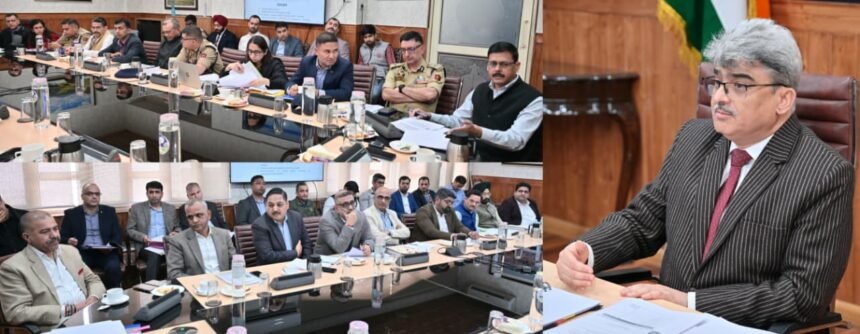
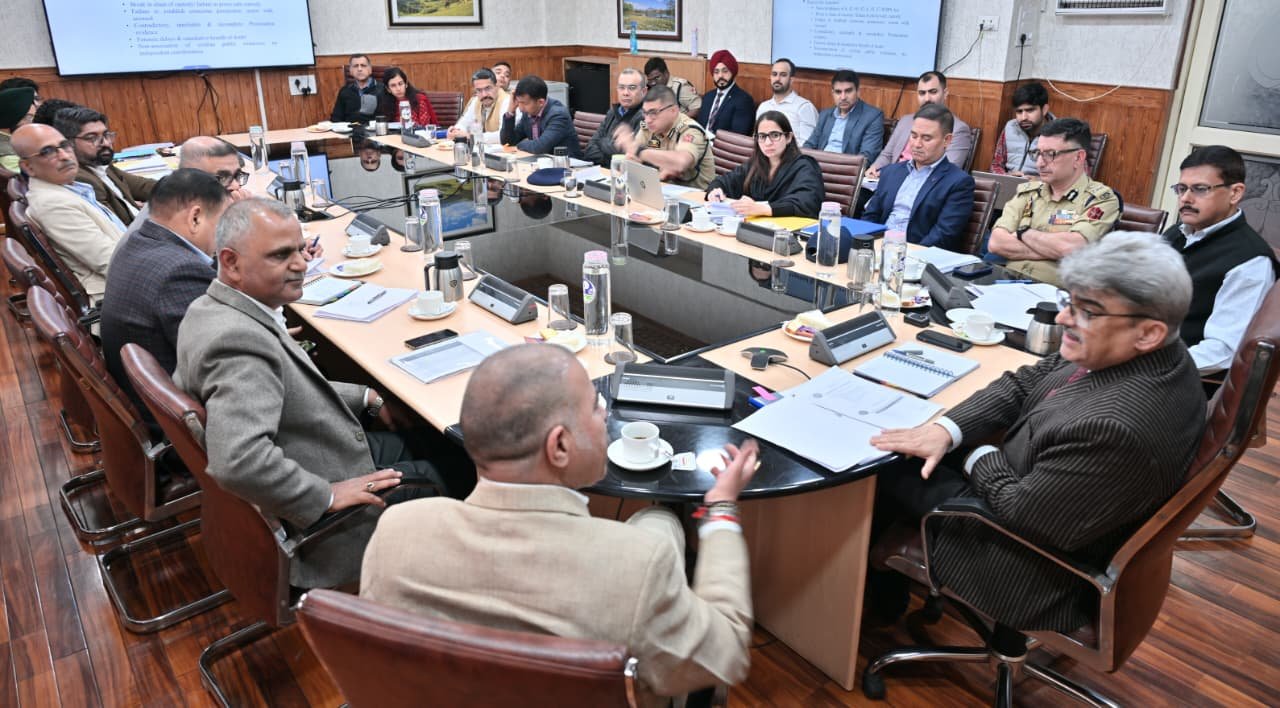
Srinagar, May 5: The 17th Union Territory-level meeting of the Narco Coordination Centre (NCORD) was chaired today by Chief Secretary Atal Dulloo, who conducted a comprehensive review of enforcement of drug laws, prosecution of offenders, and rehabilitation measures for victims of substance abuse across Jammu and Kashmir.
The meeting was attended by the Director General of Police, Director General Prosecution, Principal Secretary Home, Administrative Secretaries, Divisional Commissioners of Jammu and Kashmir, along with other senior civil and police officers. Deputy Commissioners and Senior Superintendents of Police from all districts participated through video conferencing.
During the meeting, the Chief Secretary emphasized the need to strengthen the legal framework and address procedural gaps in NDPS cases. He directed the Law Department to examine the feasibility of recording statements of in-service witnesses through video conferencing to ensure continuity in trials and avoid delays due to transfers. He also called for detailed analysis of acquittals in NDPS cases and fixing accountability where investigative lapses are found.
Highlighting enforcement priorities, the Chief Secretary stressed the importance of tracing both backward and forward linkages in drug trafficking cases and actively challenging bail orders to enhance deterrence. He called for a comprehensive strategy to dismantle drug networks and ensure strict action against offenders.
He also advocated the use of non-kinetic measures, including cancellation of driving licences, passports, and vehicle registrations, along with scrutiny of financial transactions to curb illicit drug proceeds.
On rehabilitation, he directed capacity building of counsellors across schools, colleges, Primary Health Centres, and block levels through Self Help Groups. He also instructed the Institute of Mental Health and Neurosciences (IMHANS) to develop a pool of master trainers with at least three to four trained resource persons per district, supported by refresher training programmes.
The Chief Secretary further directed Deputy Commissioners to ensure operational inpatient facilities in de-addiction centres in district hospitals and stressed strict adherence to protocols for availability of essential medicines in health institutions. He also called for stringent action under Section 52A of the NDPS Act in cases involving seizure of vehicles.
Earlier, Commissioner Secretary Law Achal Sethi gave a detailed presentation on the status of NDPS cases, highlighting pendency, disposal rates, and bottlenecks in special courts, along with suggested reforms to ensure faster adjudication.
IGP Crime Sarah Rizvi presented an overview of enforcement actions, stating that 542 NDPS cases have been registered so far in 2026, leading to the arrest of 716 individuals and seizure of 640 kg of narcotics valued at approximately ₹18.49 crore.
She further informed that 31 commercial quantity cases have been registered this year compared to 19 in the corresponding period last year. The meeting was also apprised that 10,956 NDPS cases remain pending in courts, including 6,156 in special NDPS courts.
The review noted that 1,991 cases were instituted in 2025 while 483 were disposed of, and 91 bail orders were challenged in 2025 and 57 so far in 2026. Conviction figures stood at 135 in 2024, 140 in 2025, and 23 in 2026 till date.
Officials also reported that 24 cases had successfully established backward and forward linkages, resulting in attachment of properties worth ₹53.77 lakh and freezing of bank accounts worth ₹22.63 lakh. Additionally, 489 driving licences were recommended for cancellation and 700 vehicle registrations for suspension between January and March this year.
The meeting concluded with a strong emphasis on coordinated enforcement, effective rehabilitation, and speedy prosecution to create a strong deterrent against drug trafficking and abuse in the Union Territory.