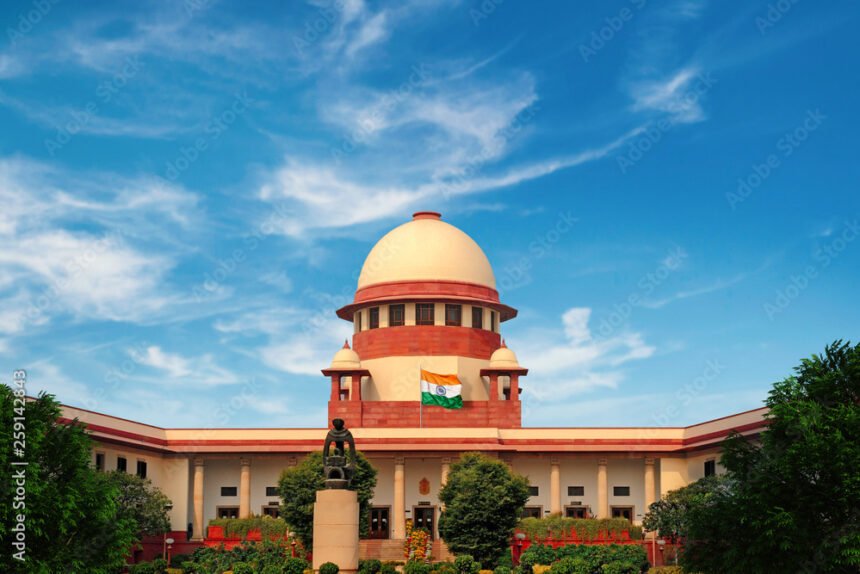
New Delhi, October 1: The Supreme Court has indicated that it will not impose a complete ban on firecrackers ahead of the festive season, while also ruling out their unrestricted use throughout the day. The court said a balanced approach was necessary, taking into account both festive sentiments and the impact of air and noise pollution on people and the environment.
A Bench of Justices M M Sundresh and P B Varale said the objective should be to specify both the types of firecrackers that can be used and the period during which they may be burst. The court observed that a complete prohibition could affect sentiments, whereas unrestricted use could have a significant impact on children, elderly people and those who are unwell.

The court also indicated that it was inclined to permit certain next-generation joint firecrackers, commonly known as ‘laris’, subject to safeguards. These conditions include limits concerning the number and size of shells and the interval between successive bursts, based on recommendations involving technical and environmental experts.
The issue of barium-containing green firecrackers, however, remains under consideration. The Centre has sought time until October 15 to submit findings from outdoor testing aimed at assessing their impact on ambient air quality. Testing is expected to help determine whether and under what conditions such formulations could be permitted.
The proceedings arise from the long-running Arjun Gopal v. Union of India case concerning pollution associated with firecrackers. The Supreme Court has previously imposed restrictions on fireworks, including regulations concerning emissions and noise levels, while subsequent orders have modified restrictions for specific circumstances.
The court has also indicated that the separate issue of firecracker restrictions in Delhi-NCR will need to be considered alongside proceedings in the MC Mehta matter because of overlapping questions. The broader regulatory framework, including permitted timings and categories of fireworks, is expected to be considered in subsequent hearings.