Iran has begun extensive preparations for the state funeral of late Supreme Leader Ayatollah Ali Khamenei, with millions of mourners expected to gather in Tehran for ceremonies that will continue over several days. The funeral is being held amid heightened regional tensions following the recent conflict with Israel.
Authorities have decorated the capital with banners calling for national unity and support for the Islamic Republic. The funeral procession, scheduled to begin on Saturday, is expected to draw one of the largest public gatherings in recent years, recalling the massive funeral of Ayatollah Ruhollah Khomeini in 1989.

Senior Iranian leaders, military commanders, religious figures and foreign dignitaries are expected to attend the ceremonies. The government views the event as an opportunity to project unity and resilience while navigating ongoing diplomatic efforts and security challenges.
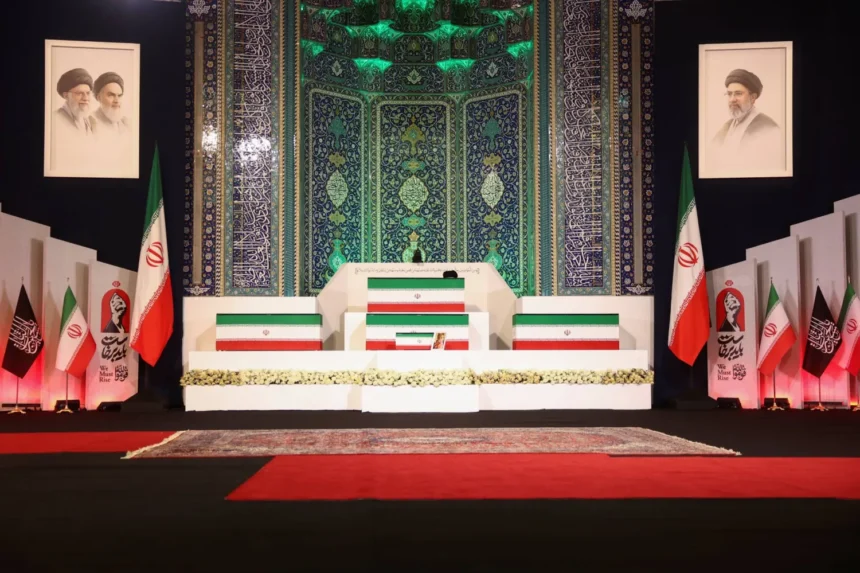
Khamenei’s flag-draped coffin has been placed at Tehran’s Grand Mosalla, where thousands have already paid their respects. Family members who were reportedly killed during the recent conflict are also being honoured. State media showed mourners participating in traditional funeral rituals, with prayers and tributes continuing throughout the day.
Among those seen at the ceremony was Revolutionary Guard General Ahmad Vahidi, who made one of his first public appearances in months. Iranian officials reiterated that the country would continue its policies of independence and resistance against external pressure.
Security has been significantly tightened across Tehran, with authorities expected to restrict movement, close major roads and suspend normal activities during the funeral procession. Khamenei’s body will later be transported to several cities in Iran and neighbouring Iraq as part of the nationwide mourning ceremonies.
The funeral comes as Iran continues to face uncertainty over its relations with the United States and Israel, with officials warning against any military escalation while reaffirming the country’s commitment to safeguarding its sovereignty.