Court Issues Letter Rogatory to China on NIA’s Plea
Investigators seek help tracing end-user records of camera linked to Pahalgam terror attack
Sanjeev Pargal
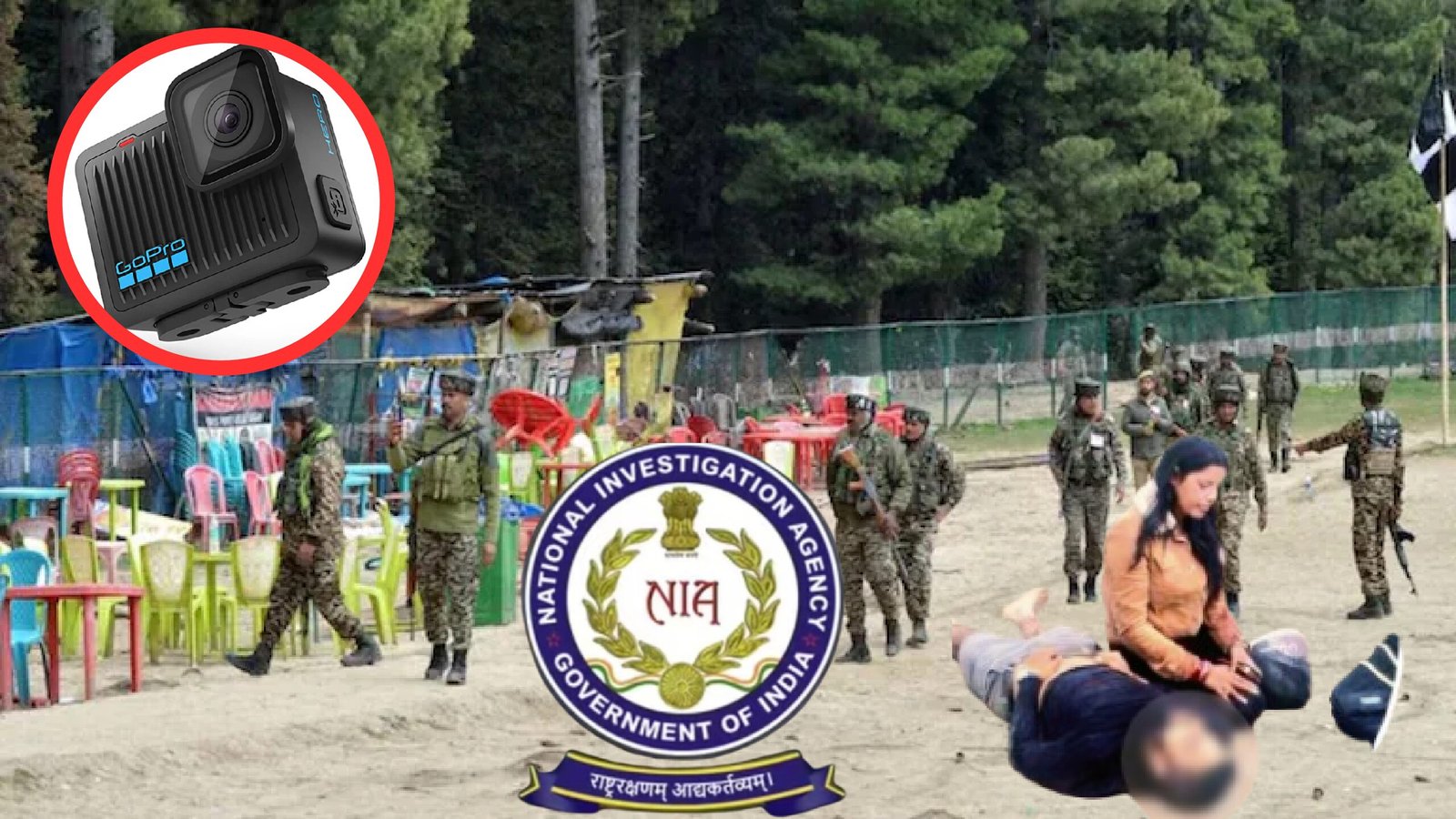
JAMMU, Mar 4: A GoPro Hero 12 Black camera, transported from China to Jammu and Kashmir, was reportedly used to conduct pre-attack reconnaissance, movement tracking, and operational preparation for the terrorist module behind the April 22, 2025, terror attack in Baisaran Valley, Pahalgam, South Kashmir, which claimed the lives of 26 civilians, including 25 tourists and a local guide.

The revelation came in an application filed by the National Investigation Agency (NIA) before the Special NIA Court in Jammu, seeking approval to issue a Letter Rogatory to Chinese authorities to trace the purchaser and end-user of the camera. The court, in its order yesterday, approved the request.
The NIA informed the court that key details regarding the camera’s activation, initial use, and commercial trail fall under the jurisdiction of China, and that the Ministry of Home Affairs (MHA) has cleared the process.
During the investigation, the NIA examined various materials and electronic devices linked to the conspiracy and execution of the Pahalgam attack. One critical device is the GoPro Hero 12 Black camera (Serial No. C3501325471706), which is considered crucial for establishing pre-attack reconnaissance and operational planning of the terrorist module.
The NIA told the court it has been unable to trace the camera’s end-user records or determine how it was transported from China to Jammu and Kashmir. To establish linkage, user attribution, and chain of custody, the agency sought judicial permission to approach Chinese authorities formally.
According to the NIA, tracing the purchaser, end-user, and associated technical records is essential to uncover the larger conspiracy behind the attack.
The court noted that the information is crucial for establishing chain of custody, user attribution, and evidentiary linkage. The camera was supplied by GoPro B.V., a US-based manufacturer, to AE Group International Limited, a distributor in China.
Since India and China are not signatories to a Mutual Legal Assistance Treaty (MLAT), the court stated that assistance can be sought under the United Nations Convention against Transnational Organized Crime (UNTOC), which both countries have ratified.
The court directed the Investigating Officer to upload a soft copy of the Letter Rogatory along with translated versions on the MLAT portal. Three sets of the physical Letter Rogatory – one original and two photocopies, along with Chinese translations – will be sent to the International Police Cooperation Unit (IPCU) of the CBI, which will forward the request to Chinese authorities through diplomatic channels.