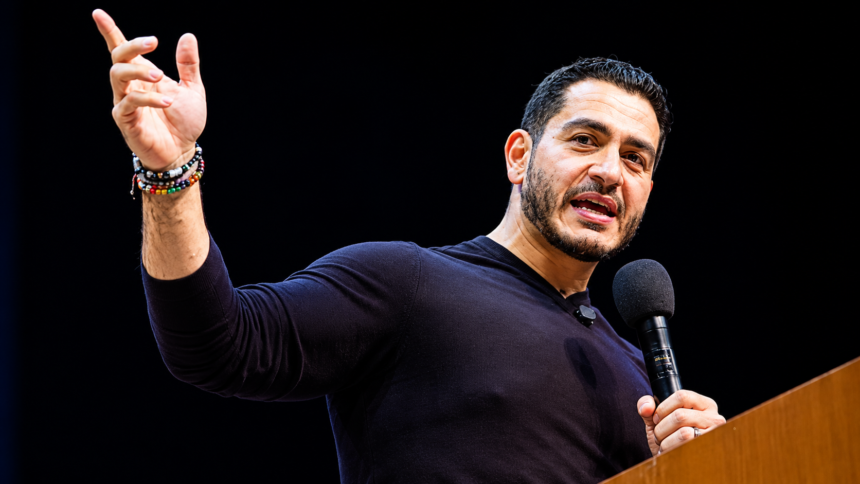
November 4: Democrat Abdul El-Sayed is at the centre of a closely watched political contest in the United States, as early election results from Michigan show him leading Republican candidate Mike Rogers in the race for a seat in the U.S. Senate. If his victory is confirmed, El-Sayed would make history by becoming the first Muslim ever elected to the United States Senate.
The Michigan Senate contest has attracted national attention, not only because of its potential implications for the balance of power in the U.S. Senate but also because of the historic significance of El-Sayed’s candidacy. His campaign has drawn considerable interest among progressive voters and communities seeking greater representation in American political institutions.

El-Sayed, a physician and former public health official, entered the general election after securing the Democratic nomination in a closely contested primary against Congresswoman Haley Stevens. He defeated Stevens in the August 2026 Democratic primary, receiving approximately 48.5 per cent of the vote against her 47.5 per cent, according to reported results.
His primary victory was widely viewed as a significant moment for the progressive wing of the Democratic Party. During the campaign, El-Sayed presented himself as a candidate focused on healthcare access, economic inequality, affordability and reforming the political system. His campaign also attracted attention for its positions on U.S. foreign policy, particularly American military assistance to Israel.
In the general election, El-Sayed faced Republican Mike Rogers, a former U.S. congressman and former FBI agent. Rogers entered the contest with significant political backing, making the Michigan race one of the closely followed Senate contests in the 2026 midterm elections.
The campaign was marked by sharp political disagreements, intense advertising and debate surrounding El-Sayed’s background, religious identity and policy positions. His Muslim faith became a prominent issue during the election campaign, with criticism and attacks drawing attention from national media and political observers.
El-Sayed’s possible victory carries significance beyond the outcome of a single Senate race. The United States has never had a Muslim elected to its Senate, and his election would represent a historic milestone for Muslim Americans and political representation in the country.
Born to Egyptian immigrant parents and raised in Michigan, El-Sayed has an academic and professional background in public health. He studied at the University of Michigan, earned a doctorate from the University of Oxford as a Rhodes Scholar and later completed his medical degree at Columbia University. He previously served as director and health officer of the Wayne County Department of Health, Human and Veterans Services.
The Michigan Senate seat became open following Democratic Senator Gary Peters’ decision not to seek re-election. The contest has been considered particularly important in the wider battle for control of the Senate, with both parties investing heavily in the state.
However, the race remains too close to call in the latest available reporting, and the final outcome will depend on the completion of vote counting and the official results. Until the result is confirmed, El-Sayed’s historic breakthrough remains a possibility rather than an officially established outcome.
If declared the winner, Abdul El-Sayed would enter the history books as the first Muslim member of the United States Senate, marking a significant moment in the country’s political history.