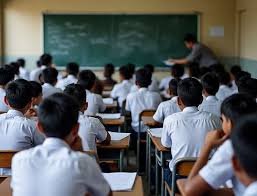
JAMMU, Feb 1: As the financial year draws to a close, the School Education Department in Jammu and Kashmir has been hurriedly organising multiple teacher training programmes to utilise remaining budget allocations. This rush, however, is reportedly disrupting regular classes in several government schools, which are already struggling with staff shortages and poor implementation of the Pupil-Teacher Ratio (PTR) norms.
Teachers’ associations and school heads allege that numerous teachers are being sent for back-to-back workshops, orientation sessions, and capacity-building trainings during regular school hours. This has led to frequent classroom disruptions and, in some cases, complete suspension of teaching—particularly in rural and remote areas—at a time when annual examinations are approaching.


“A number of our schools are already operating with minimum staff. When one or two teachers are sent for training for days at a stretch, the remaining staff cannot manage all classes. Students either sit idle or classes are combined, which affects learning outcomes,” said a headmaster of a government middle school in Jammu district, who requested anonymity.
Parents have also expressed concern over the repeated loss of teaching days. “Our children have already suffered learning setbacks due to teacher shortages and delayed syllabus completion. Now, in the name of trainings, teachers are being pulled out of classrooms. Who will compensate students for this lost study time?” asked one parent.
Teachers’ bodies claim that the sudden surge in training programmes at the financial year-end is driven more by the need to utilise budget allocations than by any academic planning. “Professional development is important, but trainings should be scheduled during vacations or non-teaching days. What is happening now is budget-driven, not education-driven,” said a representative of a teachers’ association.
The issue is compounded by the long-pending implementation of the Pupil-Teacher Ratio as mandated under the Right to Education (RTE) Act. Many government schools in Jammu continue to function with a severe shortage of subject teachers, with some primary and middle schools reportedly having only one or two teachers handling multiple classes. The deputation of teachers for training further strains the already overburdened system.
Additionally, teachers and masters appointed as Booth Level Officers (BLOs) during elections contribute to frequent classroom disruptions and loss of study time.
“The repeated disruptions, especially just days before annual examinations, will impact students’ academic performance. Yet, when results show poor outcomes, teachers are often held accountable without examining the real reasons,” said a senior school head, who has been repeatedly requesting higher authorities for adequate teacher deployment in a school with around 300 students.
The situation is exacerbated by longstanding vacancies: over 300 headmaster posts and around 40 Zonal Education Officer (ZEO) positions remain unfilled in the Jammu Division, severely affecting the functioning of headless schools and education zones.
Despite repeated attempts, the Minister for Education and the Secretary of the School Education Department could not be reached for comments. An official, speaking on condition of anonymity, said teacher trainings are part of ongoing capacity-building initiatives aimed at improving teaching quality and aligning classroom practices with the National Education Policy (NEP). However, he added that better planning is needed to avoid classroom disruptions.
Stakeholders have urged the government to streamline training schedules, ensure substitute arrangements for deputed teachers, and prioritize rational deployment to meet PTR norms. They also demanded that academic interests of students should not be compromised for financial year-end expenditure management, election duties, or other non-teaching assignments.(Agencies)