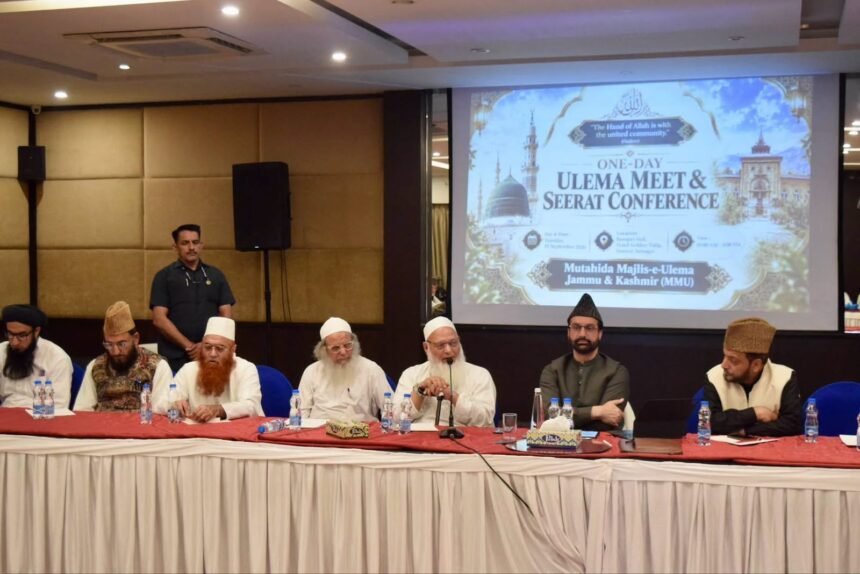
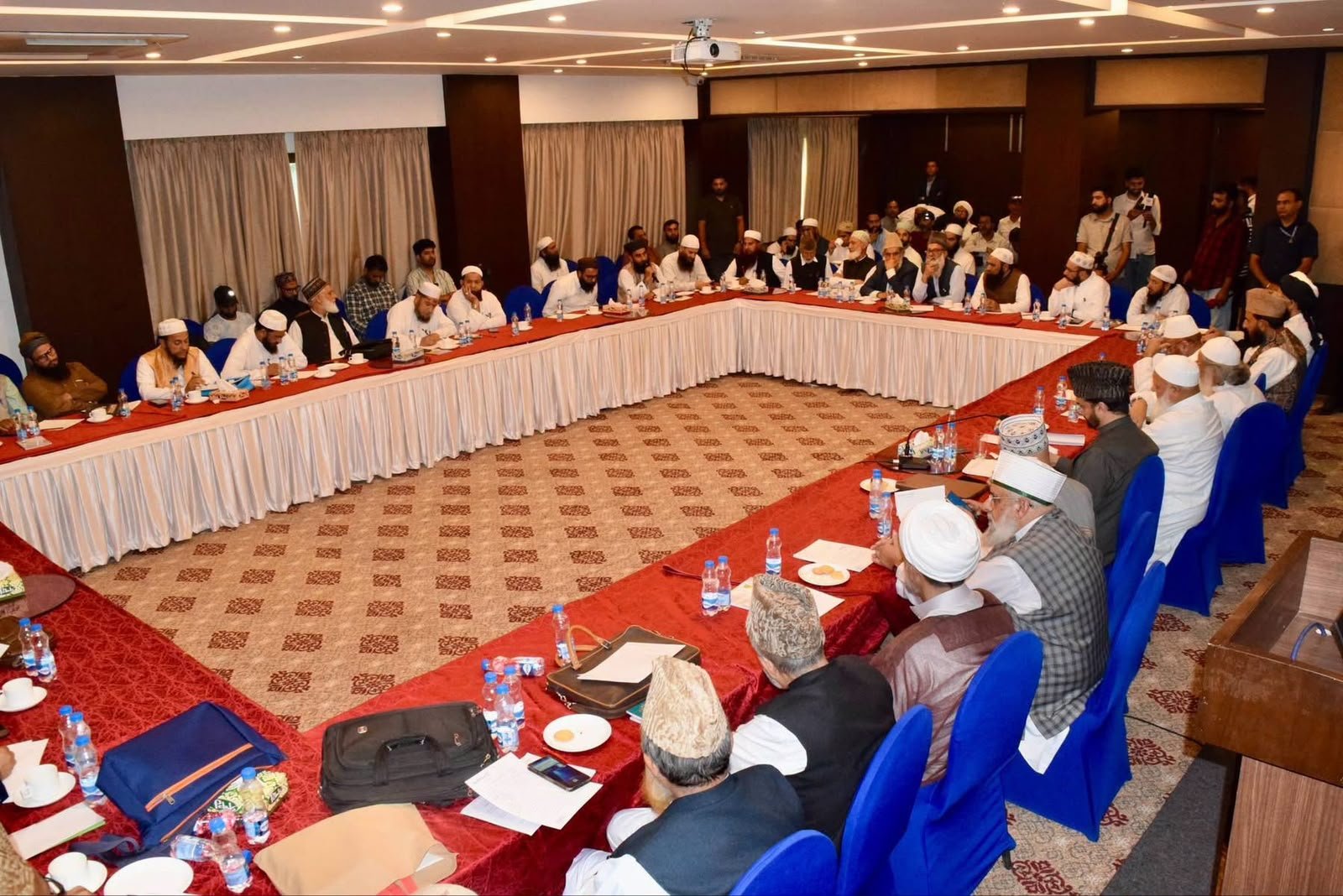
Srinagar, September 15, 2026: The United Majlis-e-Ulama of Jammu and Kashmir (MMU) on Tuesday held a one-day Ulema and Seerat Conference in Srinagar, bringing together more than 70 religious scholars and ulema from Jammu and Kashmir and Ladakh.
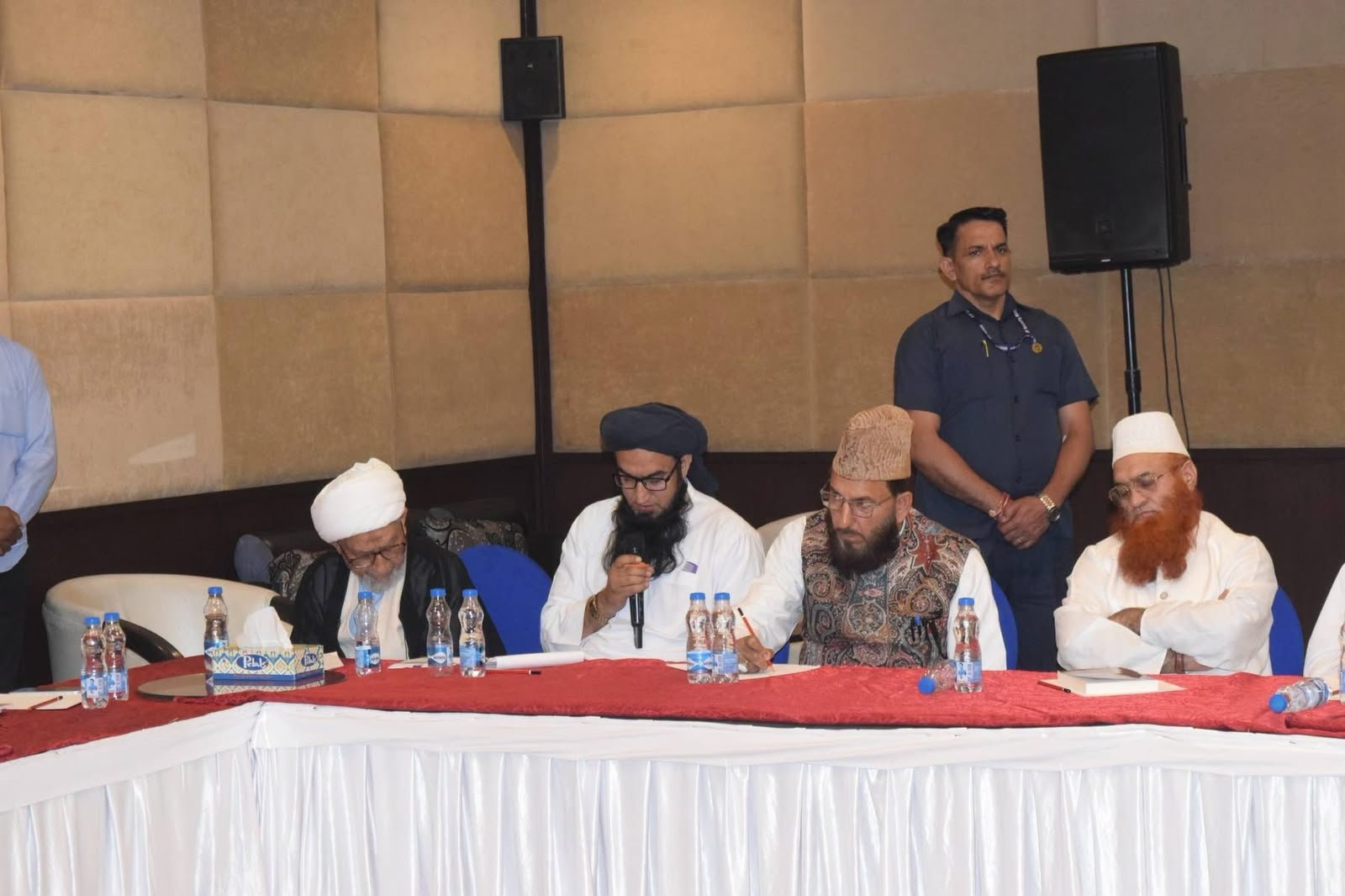



The conference, chaired by Mirwaiz Umar Farooq, was held after a gap of more than two years following permission from the authorities. Scholars from several districts of Kashmir, as well as Jammu, Poonch, Rajouri, Kargil and Doda, participated in discussions on religious, social and moral challenges facing society.
At the conclusion of the conference, participants adopted two resolutions focusing on social challenges, environmental responsibility, youth welfare, sectarian harmony and unity among Muslims.

Focus on Drugs, Youth Mental Health and Social Challenges
The first resolution expressed concern over drug and substance abuse, suicide and self-harm, mental and emotional stress among young people, irresponsible social media use, weakening family relationships, moral decline and the growing disconnect between youth and religious and social institutions.
The scholars stressed that mosques, madrasas and ulema can play a greater role in creating supportive spaces where young people and families can discuss issues such as anxiety, loneliness, family pressures and emotional distress without fear of stigma.
The conference called for greater awareness among imams and religious scholars about signs of mental distress and encouraged families to respond with empathy while guiding those in need towards qualified counselling and professional mental-health services.
Collective Friday Sermon Campaign Announced
The MMU decided that major social issues should be addressed through a coordinated Friday sermon campaign. On designated Fridays, participating mosques will focus their sermons on a common social issue to raise awareness across Jammu and Kashmir and Ladakh.
The organisation also announced plans to hold regular district-level meetings, preferably every month, involving local ulema, imams, mosques and madrasas. These meetings will focus on identifying local challenges and developing practical responses.
Concern Over Drugs and Alcohol Availability
The conference called for a comprehensive approach towards addiction and expressed concern over the increasing availability and promotion of alcohol.
The scholars argued that efforts to combat drug abuse could be undermined if liquor availability is simultaneously expanded. The resolution called upon the government to review policies relating to the availability and promotion of alcohol.
Environmental Protection Also Discussed
The first resolution also highlighted environmental concerns, including pollution, plastic and polythene use, littering, waste dumping into water bodies and encroachments on wetlands.
The conference specifically expressed concern over the condition of Dal Lake, Wular Lake, Nigeen Lake and other wetlands and water bodies. Scholars said environmental conservation and protection of shared natural resources should be treated as both social and ethical responsibilities.
Call for Sectarian Harmony and Unity
The second resolution focused on unity of the Ummah, sectarian harmony and mutual respect among different schools of Islamic thought.
The scholars acknowledged the existence of differences among various schools of thought but stressed that such differences should not become a cause of hatred, hostility or division.
They emphasised that the mosque pulpit is a trust and should not be used to ridicule other schools of thought, promote sectarianism or spread hatred.
The conference called upon ulema from different schools and regions to promote respectful disagreement, dialogue, brotherhood and mutual understanding.
MMU Seeks Ground-Level Implementation
Participants stressed that the role of religious institutions should extend beyond formal religious matters and remain connected with the everyday concerns of people, particularly young people facing social, emotional and family-related pressures.
The United Majlis-e-Ulama said the conference should serve as the beginning of a sustained programme of coordination rather than remain limited to the adoption of resolutions.
The proposed initiatives include collective Friday sermons, district-level meetings, counselling and social-awareness programmes involving ulema, mosques and madrasas across Jammu and Kashmir and Ladakh.
More than 70 ulema and religious scholars attended the conference, including Maulana Rehmatullah Mir Qasmi, Mufti Azam Nasir-ul-Islam Farooqi, Mufti Nazir Ahmad Qasmi, Mufti Muhammad Yaqub Baba Madani, Maulana Masroor Abbas Ansari, Maulana Shaukat Hussain Kaing, Mufti Inayatullah Jammu, Sheikh Mehboob Ali Wajdani Kargil, Mufti Abdul Rashid Muftahi, Pir Rehmatullah Sahib, Maulana Syed Tayyab, Mufti Syed Sharif-ul-Haq Bukhari and several other religious scholars and members of the Majlis.