New Delhi: Pakistan unexpectedly found itself at the centre of a diplomatic push on Tuesday to help end the conflict in West Asia. However, uncertainty persisted as US and Iranian officials offered conflicting accounts about possible talks to halt hostilities, now in their fourth week and already affecting global fuel and fertiliser supplies.
Reports suggesting Pakistan could serve as a venue for peace talks surfaced after US President Donald Trump said on Monday that he had delayed threatened strikes on Iranian power plants by five days following “very good and productive conversations” with Tehran. The move was reportedly part of a broader initiative involving Pakistan, Egypt, Saudi Arabia and Turkiye.
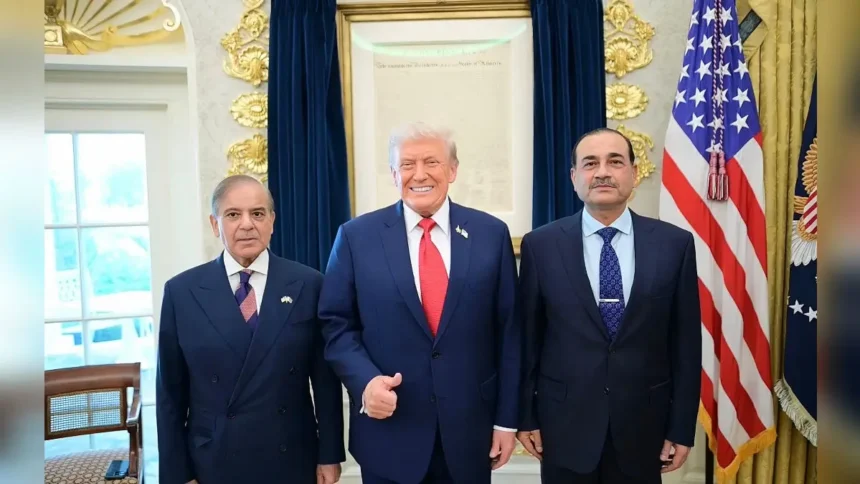
Pakistan Army chief Field Marshal Asim Munir spoke with Trump on Sunday, followed by a phone call between Prime Minister Shehbaz Sharif and Iranian President Masoud Pezeshkian a day later. Reports by the Financial Times and Axios indicated that senior officials from Egypt, Pakistan and Turkiye engaged US special envoy Steve Witkoff and Iran’s foreign minister Seyed Abbas Araghchi to relay messages aimed at finding a possible de-escalation.
An unnamed senior Iranian foreign ministry official also told CBS News that Tehran had “received points from the US through mediators” and was reviewing them.
According to these reports, Islamabad is being considered as a potential venue for talks involving a US delegation that could include Vice President JD Vance, envoy Steve Witkoff and Jared Kushner.
However, sources familiar with developments in Islamabad and Tehran said no final decision has been taken regarding such talks to end the conflict, which began after Israeli and US military strikes on Iran on February 28. They noted that Pakistan is willing to host negotiations, seeing it as an opportunity to bolster its diplomatic standing with Washington. “If the parties desire, Islamabad is always willing to host talks,” Pakistan Foreign Office spokesperson Tahir Andrabi told Dawn.
The White House, however, struck a cautious tone, saying no discussions should be considered final until formally announced. “These are sensitive diplomatic discussions and the US will not negotiate through the press. This is a fluid situation,” spokesperson Karoline Leavitt said.
Meanwhile, Iran’s Parliament Speaker Mohammad Bagher Ghalibaf said no negotiations had taken place with the US, suggesting Trump’s remarks were intended to influence financial and oil markets.
Zikrur Rahman, a former Indian envoy to Palestine, said the developments highlight close coordination among Saudi Arabia, Turkiye, Egypt and Pakistan — a grouping sometimes referred to as “STEP”. He noted that while these countries have been actively working to find a diplomatic solution, nothing concrete has emerged so far.
“They are working closely to end hostilities and offer an off-ramp to the US,” Rahman said. “But without the involvement of the IRGC, any such effort is unlikely to succeed.” (Agency)