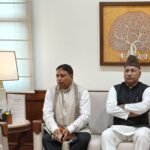
With Raj Bhavans across the country being renamed as Lok Bhavans, the move is seen as part of the Narendra Modi government’s broader push towards a service-oriented, duty-driven model of governance, marking what officials describe as a deeper ideological transition — “choosing responsibility over power and service over status.”
The Raj Bhavan in Odisha is now Lok Bhavan, a change already implemented in several other states. West Bengal renamed its Raj Bhavan in Kolkata on November 29, and the Home Ministry has issued a communication to all states to adopt the new nomenclature.


According to sources, India’s public institutions are witnessing a quiet but profound transformation, shifting the idea of governance from “satta to seva” and from authority to responsibility. They said this change is not merely administrative but cultural and moral, with the renaming reflecting a “shift in mindset.”
The Modi government has undertaken several initiatives aimed at shedding colonial legacies. Under PM Modi, the spaces of governance have been redesigned to reflect kartavya and transparency. Rajpath became Kartavya Path, symbolising the belief that power is a duty, not an entitlement. The Prime Minister’s official residence was renamed Lok Kalyan Marg in 2016, reinforcing the theme of public welfare over exclusivity.
The new PMO complex is called Seva Teerth, intended to embody the spirit of service, while the Central Secretariat has been named Kartavya Bhavan, emphasising that public service is a committed responsibility.
These changes, sources said, mark a broader ideological transition in Indian democracy, which is now “choosing responsibility over power and service over status,” and speak the language of seva, kartavya and citizen-first governance.
Odisha Governor Hari Babu Kambhampati said the new name, Lok Bhavan, reflects the administration’s commitment to stronger public participation in line with PM Modi’s vision. He said the renaming symbolises transparency, accessibility and a deeper connection between the government and the people.
“This initiative aligns with the broader vision of empowering citizens, strengthening governance, and ensuring inclusive growth. Lok Bhavan will continue to serve as an important platform for public engagement, now with renewed focus on openness and accessibility for all,” he said.
PM Narendra Modi has often stressed the need to free the country from any “mentality of slavery.” He has referred to British politician Thomas Macaulay’s efforts in 1835 as sowing the seeds of disconnecting India from its civilisational roots, arguing that India must free itself from this inferiority complex over the next decade.
Speaking recently at the Ram Janmabhoomi Mandir flag-hoisting event, PM Modi said India achieved independence but “did not get freedom from mental slavery.” He said Macaulay’s influence made generations believe foreign systems were superior, despite India being “the mother of democracy.”
The Prime Minister highlighted changes such as the redesign of the Navy flag to reflect the legacy of Chhatrapati Shivaji Maharaj as examples of a shift towards reclaiming Indian identity. “It was more than a design change — it was a declaration that India will now be defined by its own symbols, not by someone else’s legacy,” he said.
PM Modi added that freeing the nation from this mindset in the next ten years would ignite confidence and strengthen India’s foundation for the coming century. “India will be unstoppable in achieving its dream of a developed India by 2047,” he said. (Agencies)