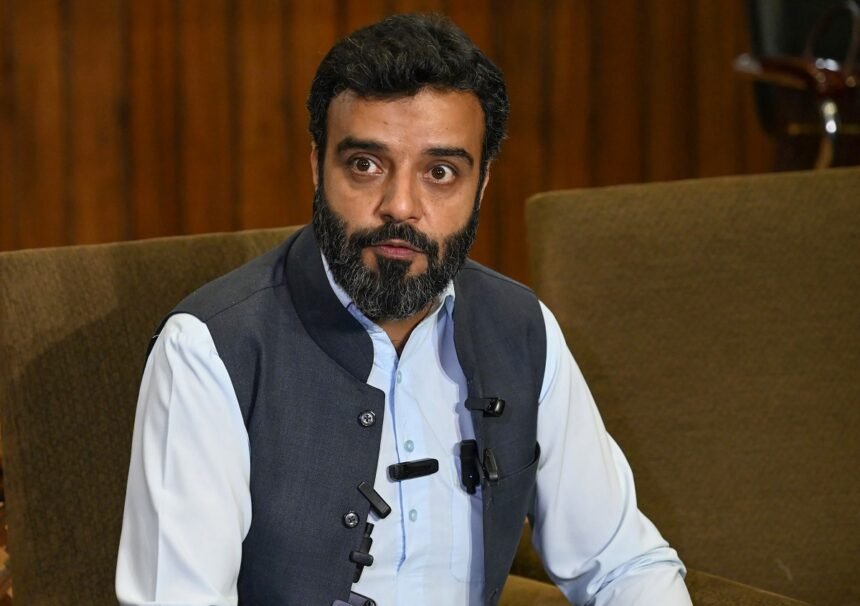
Srinagar, April 26: Member of Parliament Aga Ruhullah on Sunday held a public meeting with residents of Chhanapora and Baghat, bringing together local officials to address long-pending civic issues. The MP said he personally attended to listen to grievances and ensure accountability from the administration.
Taking a strong stand against the police administration over its attempt to take over a sports ground used by local youth for decades, Ruhullah demanded that the ground be preserved for sporting activities. He urged the police to find alternative land instead of displacing young people from spaces they have relied on for years.


“The police have thousands of crores at their disposal. Nearly ₹10,000 crore was allocated to J&K Police in the last budget alone. They can buy land elsewhere rather than snatching playgrounds from our children,” he said.
He held the administration responsible for public unrest, warning that displacing youth without providing alternatives would only fuel agitation.
On Article 370 and statehood, Ruhullah sharply criticised the ruling party for retreating from its core electoral promises. He said voters in Jammu and Kashmir supported the 2024 Assembly elections based on assurances of restoring constitutional protections, not merely statehood, which he described as a BJP promise already rejected by the people.
“Our party sought votes in the name of Article 370 and protections, then quietly shifted to statehood. That was a compromise with the mandate. Now, even that fight seems to have stopped,” he said.
He further alleged that demands for business rules had gone silent following certain “protocols” from Delhi, leaving the public mandate unaddressed.
On the Women’s Reservation Bill, Ruhullah rejected claims that the opposition had opposed it. He said the Bill was passed unanimously in Parliament in 2023, and what the opposition recently resisted was an alleged attempt to link it with nationwide delimitation.
He argued that such delimitation would significantly increase seats in Hindi heartland states while reducing fair representation for South India, Bengal, and the Northeast—calling it a form of gerrymandering similar to changes seen in Jammu and Kashmir after 2019.
“The Women’s Reservation Bill was not defeated—what was defeated was Modi’s hidden delimitation plan,” he added, saying the opposition would support the Bill if introduced independently.