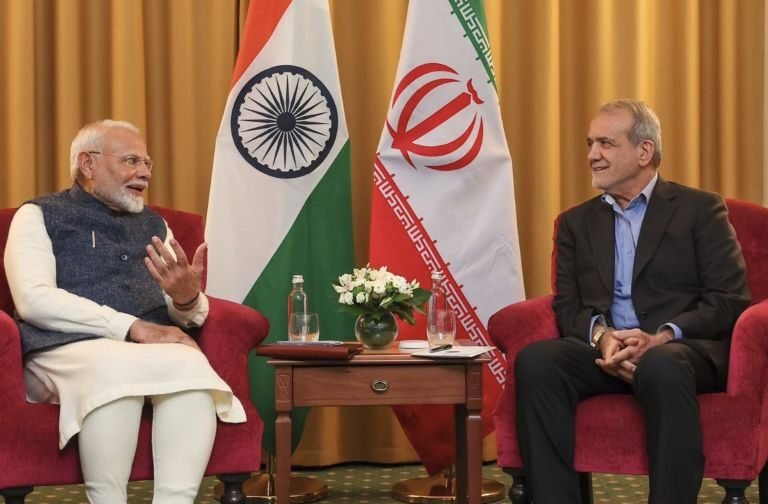
New Delhi, Mar 13: Prime Minister Narendra Modi on Thursday spoke with Iranian President Masoud Pezeshkian to discuss the worsening security situation in the Gulf region amid the ongoing West Asia conflict involving Iran and Israel.
In a post on X, Modi said he expressed deep concern over the escalating tensions in the region, particularly the loss of civilian lives and damage to civilian infrastructure.
“Had a conversation with Iranian President Dr. Masoud Pezeshkian to discuss the serious situation in the region. Expressed deep concern over the escalation of tensions and the loss of civilian lives as well as damage to civilian infrastructure,” the prime minister said.
He also stressed that the safety and security of Indian nationals remains a top priority for the government, while ensuring the uninterrupted transit of goods and energy supplies is equally important for India.
“The safety and security of Indian nationals, along with the need for unhindered transit of goods and energy, remain India’s top priorities,” Modi added, reiterating India’s commitment to peace and stability and calling for dialogue and diplomacy to resolve the crisis.
Earlier, India highlighted a high-level diplomatic effort to safeguard national interests, focusing on the protection of citizens and the stability of energy supply chains.
During the weekly press briefing, Randhir Jaiswal said the government is working to ensure the safety of about 9,000 Indian nationals in Iran, with many students and others already returning home with the help of the embassy.
He also confirmed that External Affairs Minister S. Jaishankar has held three telephone conversations with his Iranian counterpart Abbas Araghchi regarding the safety of commercial shipping and India’s energy security.
Following these talks, officials said there has been some stabilisation in the movement of Indian oil tankers through the Strait of Hormuz, a key route for India’s energy imports.
The Ministry of External Affairs is also assisting the roughly 9,000 Indians currently in Iran, including students, seafarers, businesspersons, professionals and pilgrims. Many had already left the country after advisories issued earlier this year.
The Indian Embassy in Tehran is facilitating the safe relocation of nationals who wish to leave. This includes helping them travel via land routes to Armenia and Azerbaijan, from where they can take commercial flights back to India.
Officials added that several Indian nationals, including students and pilgrims earlier based in Tehran, have already been shifted to safer locations within the country while arrangements are being made to assist those wishing to return home. (Agency)