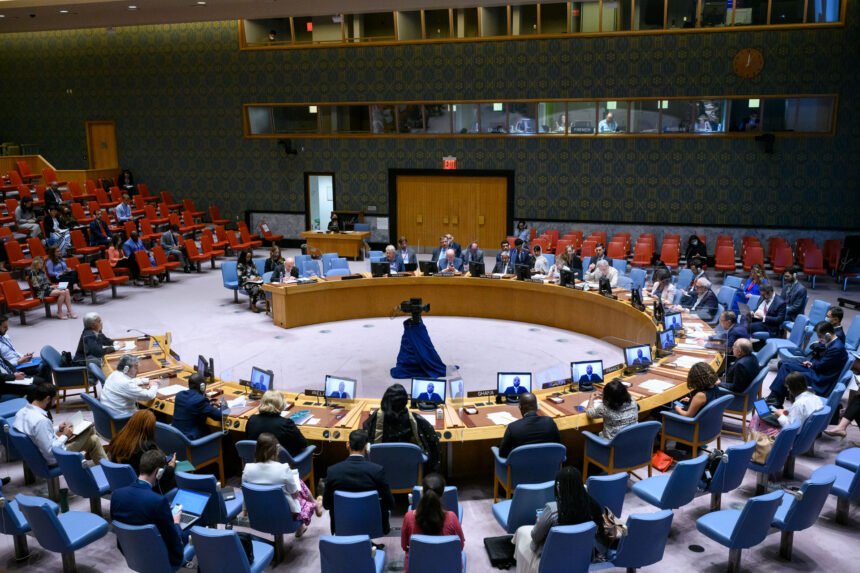
The United States and Iran engaged in a sharp exchange at the United Nations on Monday following Tehran’s selection as one of the vice presidents at a month-long conference reviewing the Nuclear Non-Proliferation Treaty (NPT).
The 11th Review Conference of the NPT, which came into force in 1970, began in New York on Monday. Conference chair and Vietnam’s UN Ambassador Do Hung Viet announced that 34 vice presidents had been nominated by different regional groups, including Iran, which was chosen by the “group of non-aligned and other states.”

US Assistant Secretary for Arms Control and Nonproliferation Christopher Yeaw strongly objected to Iran’s appointment, calling it an “affront” to the NPT framework.
He said it was “indisputable that Iran has long demonstrated its contempt for the non-proliferation commitments of the NPT” and accused Tehran of failing to cooperate with the UN nuclear watchdog on unresolved issues regarding its nuclear program. He further described Iran’s selection as “beyond shameful and an embarrassment to the credibility of this conference.”
Iran rejected the US remarks, with Reza Najafi, Tehran’s ambassador to the International Atomic Energy Agency, calling the statement “baseless and politically motivated.”
He countered by criticizing Washington’s nuclear record, stating it is “indefensible that the United States, as the only state ever to have used nuclear weapons, and the one that continues to expand and modernize its nuclear arsenal, seeks to position itself as an arbitrator of compliance.”
The dispute comes amid heightened tensions over Iran’s nuclear program during a recent conflict involving the United States and Israel. US President Donald Trump reiterated on Sunday that Iran must never acquire a nuclear weapon. Iran, however, insists its nuclear activities are peaceful, even as it continues uranium enrichment at levels Western nations argue have no civilian use and limits international inspections.
Meanwhile, Iranian sources indicated that Tehran has proposed deferring nuclear negotiations until the ongoing conflict is resolved and broader regional issues, including maritime disputes in the Gulf, are addressed.
The White House said President Trump and senior national security officials held a meeting on the situation Monday. Press Secretary Karoline Leavitt stated that “the president’s red lines with respect to Iran have been made very, very clear, not just to the American public, but also to them as well.” (Agency)