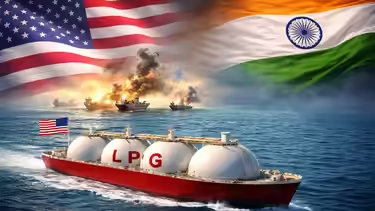
New Delhi, Jun 20: India significantly diversified its liquefied petroleum gas (LPG) import sources during the West Asia conflict, reducing its dependence on Gulf nations and ensuring uninterrupted fuel supplies despite global disruptions, according to a Crisil report.
Before the conflict, nearly 90 per cent of India’s LPG imports came from West Asia. However, by April 2026, the United States accounted for almost one-third of India’s LPG imports, up sharply from just 8 per cent in February. The shift followed a 2.2 million tonne-per-year LPG supply agreement signed with the US in late 2025, covering around 10 per cent of India’s annual import requirement.

India also resumed LPG imports from Iran, which contributed about 6 per cent of total imports in April. Additional supplies were sourced from countries including Argentina, Chile, France, and the Netherlands, helping maintain supply despite regional tensions, though at the cost of higher freight expenses and longer shipping routes.
The conflict pushed global LPG prices sharply higher. The Saudi Aramco Contract Price, the benchmark for Indian LPG imports, surged 46 per cent between February and June due to supply concerns and rising transportation costs.
Despite the spike in global prices, domestic cooking gas prices were only partially increased. The price of a 14.2-kg household LPG cylinder in Delhi rose by around 10 per cent during the period, while commercial 19-kg cylinders became more than 79 per cent costlier.
To shield domestic consumers from the full impact of rising prices, state-owned oil marketing companies (OMCs) absorbed much of the additional cost. As a result, under-recoveries on household LPG cylinders reached ₹651 per cylinder in May, with cumulative losses estimated at nearly ₹22,000 crore between March and May.
Meanwhile, LPG consumption declined significantly after reaching a record 33.2 million tonnes in FY2026. Demand fell by 13 per cent year-on-year in both March and April and dropped 20 per cent in May, with commercial and industrial users witnessing the sharpest decline due to higher market-linked prices.
According to Crisil, easing tensions in West Asia may help stabilise global LPG prices in the coming months. However, the report cautioned that India remains vulnerable to geopolitical risks, freight market volatility, and fluctuations in international energy prices, highlighting the importance of maintaining a diversified import strategy.