As bilateral negotiations between the Iran and the United States appear to have concluded without any visible breakthrough, a critical question now looms: what lies ahead? Are we on the brink of renewed military confrontation—potentially involving Israel—or has a quiet, strategic understanding already been reached behind closed doors, possibly with the discreet involvement of China and an increasingly assertive Pakistan?
A dispassionate reading of global reactions reveals something striking—silence. A measured, almost calculated quiet from major powers. During a recent briefing, Donald Trump asserted that the United States had already achieved its objectives. Yet this assertion sits uneasily against the broader strategic picture.

After nearly forty days of confrontation, the perception—particularly across parts of Asia and the Middle East—is that Iran has held its ground, if not emerged stronger diplomatically. While claims regarding the destruction of high-value American assets remain contested and unverified, what is undeniable is Iran’s ability to sustain pressure, project resilience, and avoid strategic collapse in the face of a far more powerful adversary.
For a global superpower, the optics of such a standoff matter deeply. The United States, long accustomed to asserting overwhelming dominance, cannot easily accommodate narratives of stalemate—let alone defeat—especially against a country with comparatively limited conventional air power. In such circumstances, the pursuit of a calibrated exit becomes not just desirable, but necessary.
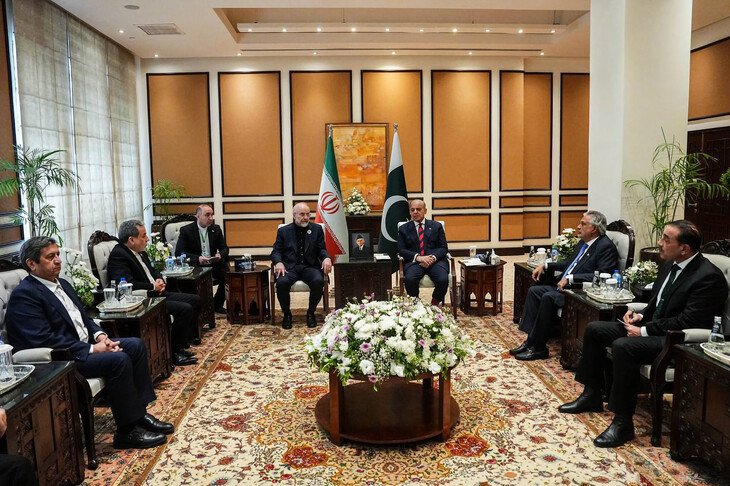
This is where the role of Pakistan enters the frame. The widely publicized peace efforts attributed to Islamabad may indeed reflect genuine diplomatic engagement—but they also serve another function: providing all sides with a face-saving mechanism. By positioning itself as a mediator, Pakistan has elevated its regional relevance, projecting itself as a crucial diplomatic interlocutor at a moment of heightened global tension.
At the same time, speculation persists about deeper, less visible negotiations. Could there be a broader understanding quietly facilitated by China, aimed at stabilizing the region while recalibrating power equations? Such backchannel diplomacy, if it exists, would not be unprecedented in international relations.
The reality is that the full contours of any potential agreement remain obscured. What has been presented publicly as stalled or inconclusive talks may, in fact, conceal incremental progress or tacit compromises that have yet to surface.
The coming days will be decisive. If the United States moves toward renewed military escalation, it would suggest that diplomacy has indeed failed. If, however, tensions gradually subside without dramatic announcements, it may indicate that a silent framework of understanding is already in place.
One point remains central: any agreement perceived as being dictated by Iran would carry significant symbolic weight. For Washington, accepting stringent terms could be interpreted globally as a retreat—an outcome difficult to reconcile with its long-standing image as the world’s preeminent power. And yet, in geopolitics, perception often diverges from reality; what appears as concession may, in fact, be strategic recalibration.
In the end, this moment may not mark a clear victory or defeat for either side. Instead, it could represent something far more complex—a rebalancing of power, negotiated not in headlines, but in silence.