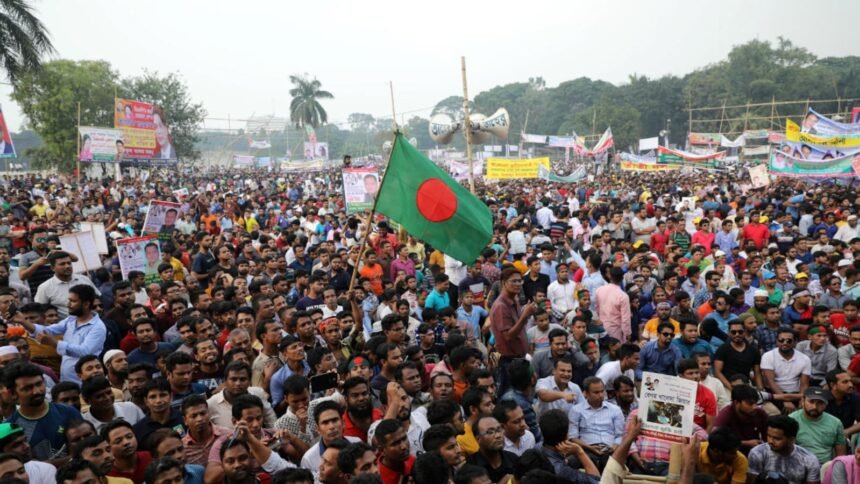
Dhaka, Feb 12: Bangladesh is holding a parliamentary election that could reshape the nation after years of political instability. This is the first election since former Prime Minister Sheikh Hasina was ousted amid deadly protests in 2024, making a clear outcome crucial for stable governance.
Key facts about Thursday’s election:

127 million eligible voters, including 5 million first-timers
More than 127 million people are eligible to vote in the country of around 170 million. A total of 2,028 candidates are contesting parliamentary seats nationwide. The electorate includes roughly 64.8 million men, 62.9 million women, and 1,234 transgender voters. Young people, who played a key role in the 2024 uprising, are expected to have a major influence, with about 5 million first-time voters eligible.
800,000 staffers at polling stations
The election is being conducted across 42,779 polling stations, with around 800,000 officials overseeing the process. The interim administration, led by Nobel Peace Prize laureate Muhammad Yunus, has vowed to ensure a free, fair, and peaceful election. Security is being tightened with roughly 900,000 police and other officers deployed.
Around 500 foreign observers and journalists, including representatives from the European Union and the Commonwealth, are monitoring the election.
A five-year term government
Bangladesh’s national legislature has 350 seats, with 300 elected directly from single-member constituencies and 50 reserved for women. Each Parliament serves a five-year term. Voting is taking place in 299 constituencies, while polling in one seat has been postponed due to the death of a candidate.
It’s largely a two-way contest
Some 50 parties are contesting the elections, but Hasina’s former ruling Awami League has been banned from participating. The election is mainly a contest between the Bangladesh Nationalist Party (BNP) and an 11-party alliance led by Jamaat-e-Islami, the country’s largest Islamist party.
BNP’s Tarique Rahman, son of former Prime Minister Khaleda Zia, is a contender to lead the next government. The alliance also includes the National Citizen Party (NCP), a new party formed by student leaders from the 2024 uprising.
Controversial past elections
This is Bangladesh’s 13th parliamentary election since independence in 1971. Previous elections in 2014, 2018, and 2024 were controversial, with allegations of rigging in favor of Hasina or boycotts by major opposition parties.
Bangladesh uses a first-past-the-post system, where the candidate with the most votes wins. To secure a majority, a party or coalition must win at least 151 seats. (Agencies)