Washington, Jan 21: Sharpening his rhetoric on Greenland, US President Donald Trump raised questions about NATO’s reliability, suggesting that security commitments to Europe could increasingly be tied to economic and strategic leverage.

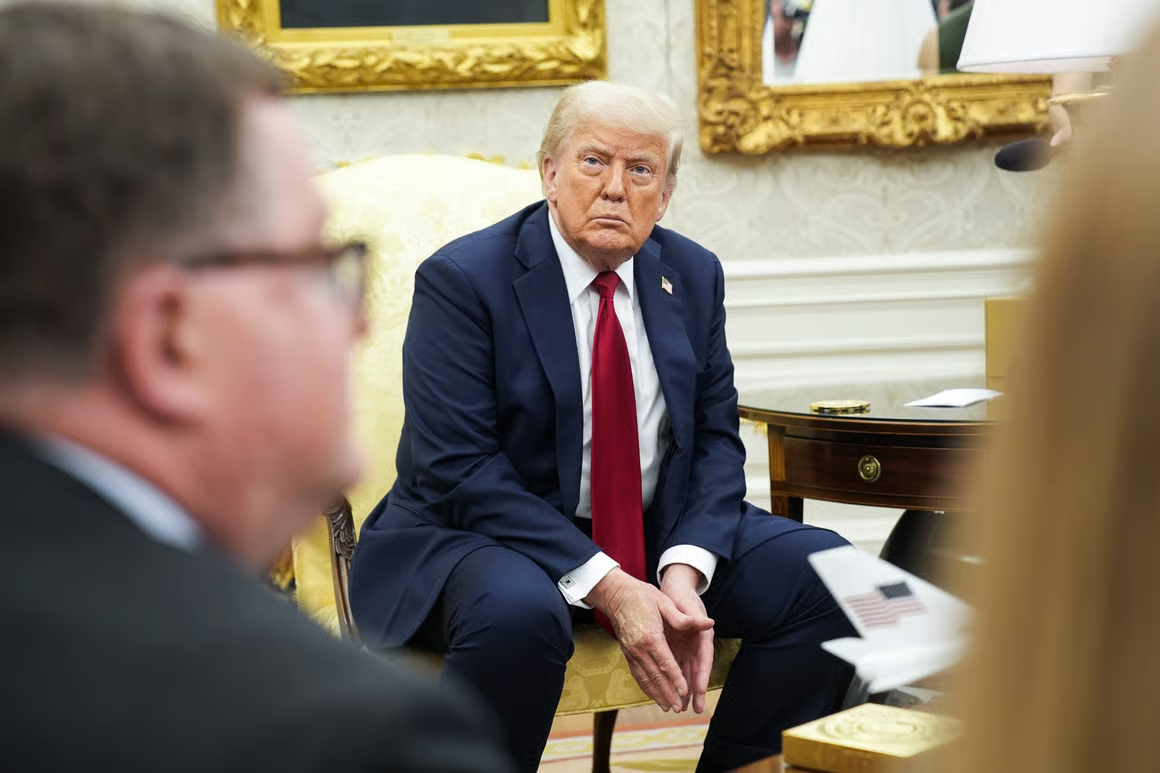
At a White House news conference marking one year since his return to office, Trump declined to specify how far Washington might go to protect US interests related to Greenland. Asked directly, he replied: “You’ll find out.”
Pressed on whether military force was an option, Trump avoided specifics and pointed instead to economic tools. “Tariffs, licensing, and other alternatives are available,” he said, describing them as “the best, the strongest, the fastest.”
Trump also said he had meetings on Greenland scheduled during his trip to Davos. “We have a lot of meetings scheduled on Greenland,” he said, adding that he believed “things are going to work out pretty well.”
The president paired these comments with renewed criticism of NATO. He reiterated that he strengthened the alliance by pushing member countries to raise defense spending, claiming allies had agreed to increase contributions to 5 percent of GDP, up from the long-standing 2 percent target. “Getting them to five percent of GDP was something nobody thought was possible,” he said.
At the same time, Trump questioned whether NATO would stand by the United States in a crisis. “NATO is only as good as we are,” he said. “Without the US, the alliance would not be very strong.” He expressed concern over whether allies would come to America’s aid.
Trump maintained that while US pressure improved NATO’s position, he remained skeptical of the alliance’s structure, arguing that the US bears a disproportionate share of the burden. He said his approach forced allies to pay more and purchase more from the United States.
He also dismissed attending a proposed G-7 emergency meeting in Paris. Asked if he would go at the invitation of French President Emmanuel Macron, Trump replied, “No, I wouldn’t do that,” questioning Macron’s political longevity and emphasizing his preference for meetings with leaders “directly involved.”
Trump said he got along personally with Macron and British Prime Minister Keir Starmer, but added that both countries faced serious challenges, highlighting immigration and energy issues as Europe’s main concerns. He urged leaders to rethink wind power and prioritize domestic energy resources.
The remarks reflect Trump’s broader approach to foreign policy, linking security guarantees to economic pressure. He argued that tariffs and trade leverage compel both allies and rivals to negotiate, making the United States “richer and more secure.” “We’re the richest we ever were,” he said, crediting these pressure tactics for the gains.
Greenland and NATO are increasingly important as Arctic competition grows and Europe faces strategic challenges. Trump’s comments suggest that US policy will continue to tie alliances, territory, and trade more closely together. (Agencies)