Asif Iqbal Naik
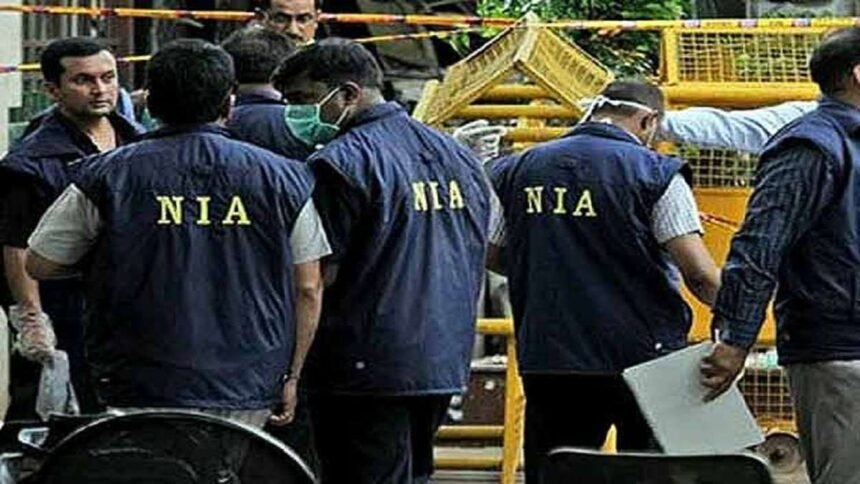
Jammu, December 28, 2025: Reaffirming India’s unwavering commitment to eliminate terrorism in all its forms, the 5th Anti-Terror Conference (ATC) of the National Investigation Agency (NIA) concluded on Saturday with a strong emphasis on strengthening the country’s counter-terror architecture and enhancing coordination between central and state agencies.

Held under the firm directive of Prime Minister Shri Narendra Modi’s policy of “Zero Tolerance to Terrorism”, the two-day conference focused on evolving security challenges, technological advancements in terror investigations, and the need for a uniform and robust anti-terror framework across the nation.
The conference was inaugurated on Friday by Union Minister of Home Affairs and Minister of Cooperation, Shri Amit Shah, who underscored the urgency for states to expeditiously implement a uniform Anti-Terror Squad (ATS) structure. He stressed that without a consistent and capable operational framework nationwide, effective intelligence sharing and coordinated counter-terror action would remain a challenge.
Addressing the conference, the Home Minister lauded the recent operational and investigative successes of central and state agencies, particularly in the Pahalgam terror attack and the Delhi Red Fort blast cases. He highlighted the meticulous investigation that led to the tracking and elimination of three terrorists involved in the Pahalgam attack. Referring to Operation Sindoor and Operation Mahadev, he termed these actions as a strong and decisive response by the Government of India and the country’s security forces against terror masterminds, including those operating from across the border.
Shri Amit Shah further emphasized the need to continuously review and adapt to the changing terror landscape, especially in the context of cyber warfare, hybrid threats, multi-layered security challenges, and international dimensions of terrorism. He called upon both central and state agencies to strengthen investigation and prosecution capabilities and to ensure regular training of police and security personnel.
A significant highlight of the conference was the introduction of Track 2, which focused on critical areas such as digital device data, big data analytics, digital forensics, and unmasking digital anonymity—key tools in tackling modern, technology-driven terrorism.
Union Home Secretary Shri Govind Mohan, in his concluding remarks, hailed the institutionalisation of the Anti-Terror Conference as a vital platform to reinforce India’s zero-tolerance approach. He cautioned against emerging threats such as radicalisation, recruitment of vulnerable youth, narco-terrorism, cyber-enabled terror networks, deepfakes, maritime terrorism, and illicit trafficking.
He also praised the NIA for achieving a conviction rate exceeding 90 percent, stating that the Centre’s objective is to replicate this success across all police forces in the country.
The conference deliberations also included lessons learned from investigations in different theatres such as Left Wing Extremism (LWE)-affected areas, the North-East, and various hybrid threat scenarios. Special focus was laid on terror financing, data analysis in counter-terrorism investigations, and evolving counter-terror jurisprudence.
On the occasion, the Home Minister congratulated officers and staff who were honoured with service medals for their exemplary contributions. He also paid heartfelt tributes to more than 36,000 CAPFs and police personnel who laid down their lives in the line of duty while safeguarding the nation.
The inaugural session witnessed the participation of heads of State Police, Chief Police Officers (CPOs), Central Armed Police Forces (CAPFs), and over 150 delegates from various State/UT police and central organisations. Union Ministers of State Shri Nityanand Rai and Shri Bandi Sanjay Kumar were also present.
The conference served as a critical platform for reinforcing coordination, enhancing technological capabilities, and strengthening India’s resolve to combat terrorism decisively and comprehensively.