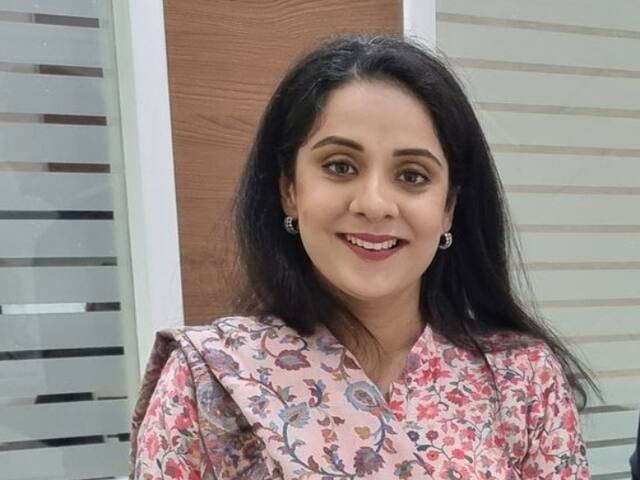
New Delhi: The Muslim community in India is gradually moving beyond traditional vote-bank politics and increasingly focusing on development, education, security, employment and access to government welfare schemes, according to Kausar Jahan, former Chairperson of the Delhi Haj Committee.
In her article, titled “Muslim Society Is Moving Beyond Traditional Politics,” Jahan argues that the political preferences of Muslim voters are evolving, particularly in the changing social and political landscape ahead of the Uttar Pradesh Assembly elections.


She observes that Muslim voters have traditionally been viewed as a consolidated vote bank in electoral politics. However, this perception is changing as people increasingly assess political parties based on governance, development initiatives and the benefits delivered through government schemes.
Welfare Schemes Changing Political Perceptions
Jahan emphasises that government welfare benefits should be understood through the principle of eligibility rather than religion or community.
She highlights several flagship initiatives of the Narendra Modi government, including the Pradhan Mantri Awas Yojana, Ujjwala Yojana and Ayushman Bharat, stating that these schemes have benefited economically weaker sections, including members of the Muslim community.
According to the article, around 13.49 lakh houses had been sanctioned under the urban housing scheme by July 26, 2024, accounting for approximately 12.83 per cent of the total sanctioned houses.
The article also refers to more than 10.57 crore LPG connections provided under the Ujjwala Yojana by May 2026. Other initiatives, including free ration, health coverage of up to Rs. 5 lakh under Ayushman Bharat and access to basic housing facilities, are cited as examples of welfare-oriented governance.
PM Vikas Scheme Focuses on Minority Empowerment
Jahan also highlights the PM Vikas scheme, which aims to connect minority artisans, youth and women with skill development, education and employment opportunities.
She says the initiative seeks to preserve traditional skills while connecting artisans with modern markets, creating new livelihood opportunities and strengthening the economic position of minority communities.
The article further points to the government’s legislation against triple talaq, describing it as an important step towards providing legal protection to Muslim women.
Changing Electoral Trends and Political Choices
Referring to electoral developments, Jahan argues that Muslim voters are increasingly evaluating political parties beyond conventional community-based political considerations.
She cites the BJP’s victory in the Kundarki Assembly constituency by-election in November 2024 as an example of changing political dynamics.
The article also refers to electoral developments in Assam and West Bengal, suggesting that the BJP’s expanding political presence in areas with significant Muslim populations reflects changing electoral equations.
According to Jahan, these developments indicate that Muslim voters are increasingly willing to consider governance, leadership and development while making electoral choices.
Development Should Remain the Priority
Highlighting the importance of education, healthcare, employment and women’s empowerment, Jahan argues that political parties must move beyond narrow electoral calculations and focus on improving the living conditions of ordinary citizens.
She stresses that access to education, healthcare, employment and legal rights should be ensured for all communities without discrimination.
Referring to Prime Minister Narendra Modi’s slogan, “Sabka Saath, Sabka Vikas, Sabka Vishwas and Sabka Prayas,” she says the vision reflects an approach based on inclusive development and equal opportunities.
Concluding her argument, Jahan says that the Muslim community should not be viewed merely through the prism of vote-bank politics. Instead, it should be recognised as an equal stakeholder in India’s development journey.
She expresses confidence that the changing aspirations of the community could contribute to a broader political shift, where development, welfare and governance take precedence over traditional political alignments.
Written— Kausar Jahan
Former Chairperson, Delhi Haj Committee