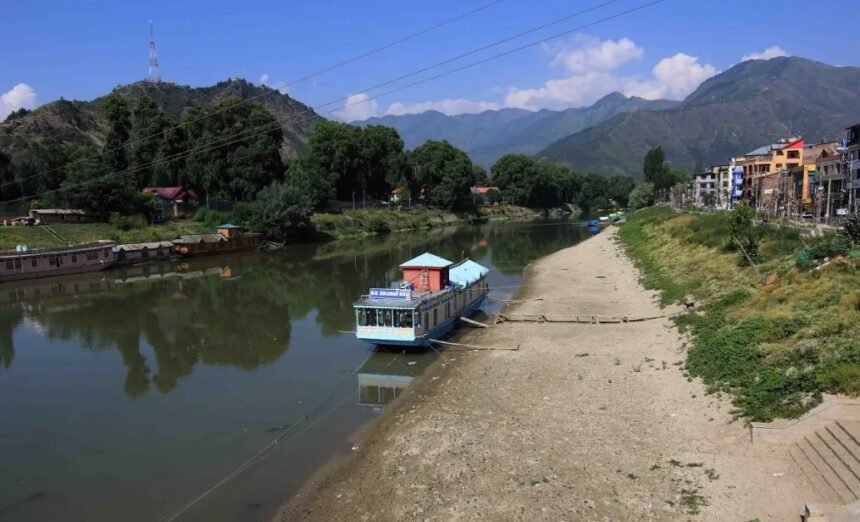
Jammu and Kashmir has recorded a 17 per cent seasonal rainfall deficit so far, with six districts in the Kashmir Valley — including Srinagar — receiving below-normal precipitation, while four districts have reported large excess rainfall, official data revealed on Thursday.
According to the meteorological data for October 1 to December 10, 2025, the Kashmir Division received an average of 64.5 mm of rainfall against the normal 77.5 mm.


Data accessed by Kashmir News Observer (KNO) shows that several key districts recorded major deficits:
-
Srinagar: 38.6 mm vs 73.1 mm
-
Pulwama: 29.4 mm vs 52.5 mm
-
Shopian: 16.5 mm vs 74.5 mm
-
Badgam: 23.1 mm vs 58.3 mm
-
Bandipora: 27.5 mm vs 79.1 mm
-
Baramulla: 28.3 mm vs 84.8 mm
These districts fall under the deficit rainfall category, defined as 20–59 per cent below normal.
Meanwhile, several Jammu division districts recorded large excess rainfall:
-
Jammu: 74.7 mm vs 54.3 mm
-
Kathua: 89.1 mm vs 56 mm
-
Reasi: 103.4 mm vs 67.1 mm
-
Doda: 129.8 mm vs 84.2 mm
-
Samba: 48 mm vs 18.3 mm
The persistent dry spell has led to the drying of multiple major springs across Kashmir, impacting drinking water supply in many rural areas.
Officials noted that despite localised deficits, the overall water situation is under control. However, the Jhelum River has witnessed a significant decline, with the water level dropping to 0.65 metres at Sangam on December 10 — the lowest this season.
The Standardised Precipitation Index (SPI) shows negative values across many districts, indicating widespread dry conditions.
Authorities have urged residents to conserve water and regularly monitor minor streams and springs that supply water to villages, especially in south Kashmir, where the deficit is more pronounced.
Witnesses from several areas in north and south Kashmir confirmed that springs catering to hundreds of households have been experiencing drying conditions for weeks. (Agencies)