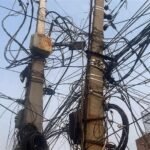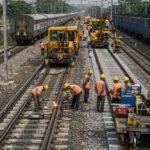
Jammu, known as the City of Temples, continues to reflect a mix of heritage and urban pressure, where rapid expansion has exposed deep challenges in governance and infrastructure. The Jammu Municipal Corporation (JMC) has made measurable progress under the Smart City framework, but issues such as encroachments, waste management, sewage treatment, and shrinking public spaces continue to hinder full transformation.
The city has expanded far beyond its traditional core, prompting proposals to nearly double its municipal area under the Master Plan 2032. However, older parts of Jammu remain heavily congested, with narrow roads, blocked pedestrian pathways, and widespread encroachments even in high-security administrative zones.


Despite judicial intervention and administrative efforts, encroachments in key markets such as Hari Market continue to obstruct public movement, raising concerns over enforcement gaps. While successful projects like the Tallab Tillo canal walkway show progress, similar initiatives in old city areas have often failed due to misuse and further encroachments.
Solid waste management remains a major challenge, with Jammu generating hundreds of tonnes of waste daily, much of which is still not scientifically processed. The absence of key infrastructure such as RDF plants limits the city’s ability to convert waste into usable energy or recycled material, increasing environmental pressure.
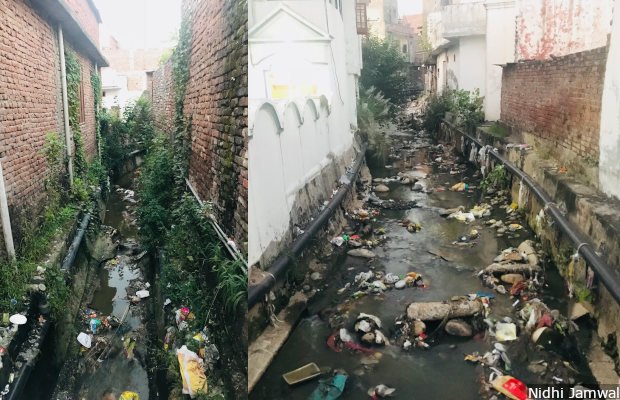
Sewage treatment is another critical concern, with multiple STPs either non-functional or operating below capacity. Untreated wastewater continues to flow into the Tawi River and surrounding canals, raising serious public health and environmental risks despite significant past investments.
Water supply and groundwater depletion further complicate the situation, while key projects like the Chenab Water Lift scheme and expanded AMRUT initiatives remain delayed. Meanwhile, heritage restoration and Smart City beautification projects offer some positive momentum, particularly in areas like Raghunath Bazaar and Apsara Road.
However, experts and civic observers stress that without resolving core issues such as waste processing, sewage treatment, encroachment control, and infrastructure maintenance, Jammu’s Smart City vision will remain incomplete.