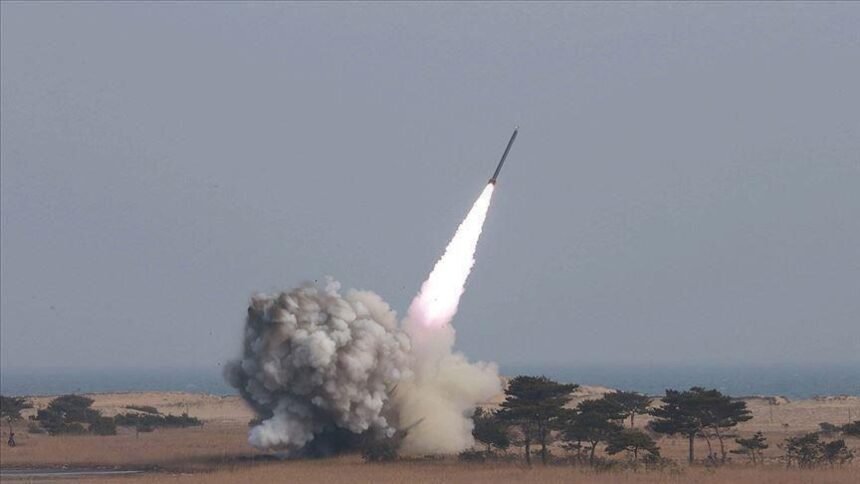
Dubai, Mar 28: Israel’s military reported that Yemen launched a missile toward Israel early Saturday, marking the first time the country has faced fire from Yemen.
Sirens sounded around Beer Sheba and near Israel’s main nuclear research center overnight Friday into Saturday as Iran and Hezbollah continued attacks. The Houthi rebels, backed by Tehran and controlling Yemen’s capital Sanaa since 2014, did not immediately claim responsibility.


The Houthis have largely stayed out of the conflict due to a fragile ceasefire with Saudi Arabia, which has been at war with them on behalf of Yemen’s exiled government since 2015.
Attacks on vessels during the Israel-Hamas conflict have already disrupted Red Sea shipping, through which roughly USD 1 trillion worth of goods pass annually. The rebels have also launched drones at Israel.
Hours after threatening to escalate its campaign, Israel struck Iranian nuclear facilities. Iran retaliated by attacking a base in Saudi Arabia, wounding US personnel and damaging aircraft.
Houthi military spokesman Brig. Gen. Yahya Saree warned of possible direct intervention on Iran’s behalf if hostilities continue, citing ongoing escalation against the “Axis of Jihad and Resistance.” The group has previously targeted over 100 merchant vessels in the Red Sea, sinking two ships and killing four sailors between November 2023 and January 2025.
Prior to Yemen’s missile attack, Tehran had agreed to allow humanitarian and agricultural shipments through the Strait of Hormuz, a vital waterway handling a fifth of global oil shipments and a third of fertilizer trade. The UN has emphasized the importance of keeping essential aid flowing.
Iranian strikes on Prince Sultan Air Base in Saudi Arabia wounded at least ten American troops, some seriously, and damaged several refueling aircraft.
Israel Strikes Iranian Nuclear Facilities
Israel claimed responsibility for attacks on the Shahid Khondab Heavy Water Complex in Arak and the Ardakan yellowcake production plant in Yazd Province. There were no casualties or contamination risks. Iran vowed retaliation, with Foreign Minister Abbas Araghchi warning of a “heavy price” for Israeli actions.
Rising Tensions and Diplomatic Moves
US efforts to negotiate a ceasefire, including talks via Pakistan, have so far been rejected by Iran, which proposed a five-point plan asserting sovereignty over the Strait of Hormuz. Meanwhile, former US President Donald Trump reiterated his push for Israeli-Saudi normalization once hostilities end.
Military and Humanitarian Impact
US troops, including 2,500 Marines and 1,000 paratroopers from the 82nd Airborne, have been deployed to the region. Israel sent its 162nd Division into southern Lebanon to protect northern border towns and counter Hezbollah.
The UN’s International Organization for Migration reported that 82,000 civilian buildings in Iran, including hospitals and homes for 180,000 people, have been damaged. Jan Egeland, secretary-general of the Norwegian Refugee Council, warned of a potential “far wider humanitarian disaster” affecting millions.
Casualties
At least 19 people have died in Israel, including four soldiers in Lebanon. Over 1,100 people have died in Lebanon, more than 1,900 in Iran, 13 American troops, four in the West Bank, and 20 in Gulf Arab states. In Iraq, 80 security personnel have died due to Iranian-supported militia involvement.
The conflict shows no sign of abating, with escalating military, diplomatic, and humanitarian consequences across the region. (Agency)