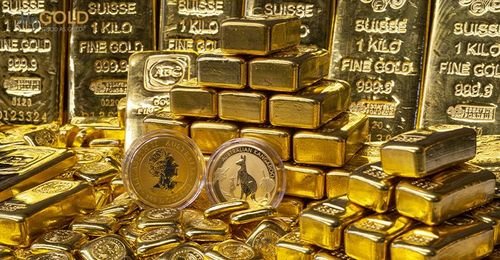
Gold’s market value has soared to an estimated $30–$35 trillion “economy”, surpassing the combined GDP of India and the United Kingdom, as the Iran war pushes investors toward the world’s oldest safe-haven asset.
The rally has accelerated following U.S.-backed Israeli strikes on Iran and Tehran’s retaliatory attacks across the region, which caused volatility in global markets and drove investors toward bullion.

International gold benchmarks have climbed above $5,400 per ounce, flirting with record levels near $5,600, extending a multi-year rally already fueled by central bank buying and lingering post-pandemic inflation fears.
With prices surging, the total value of above-ground gold has ballooned into the $30–$35 trillion range, far exceeding the roughly $8–$9 trillion combined GDP of India and the UK.
Where is Gold Moving?
Gold has just broken out of a 13-year trading base, similar to major breakouts in 1972 and 2005 that lasted six to eight years. It has started to outperform both stocks and the classic 60/40 portfolio after a decade of sideways movement.
The war has effectively created what some analysts call a “financial superpower” in bullion—a massive store of wealth that expands when geopolitical risks spike. Markets are reacting in real time: missile strikes, threats to shut the Strait of Hormuz, and attacks on energy infrastructure have triggered selling in cyclical equities and fresh flows into gold.
The conflict has also affected other commodities, driving oil prices higher and rattling global stock markets, as investors increasingly view gold as the ultimate hedge in a world where war, inflation, and debt risks collide.
The scale of the shift is stark. India has spent a decade doubling its economy and still aims to cross $5 trillion in GDP, while Britain hovers around $3 trillion. Gold, by contrast, now carries a valuation that eclipses both, without factories, workers, or elections, driven solely by a fixed global stock repriced by fear.
Analysts remain divided on whether this “gold superpower” moment will last. A de-escalation in Iran, stronger economic growth, or higher real interest rates could trigger a correction. Others argue that structural factors—central bank accumulation, chronic geopolitical tension, and growing distrust of fiat currencies—will keep bullion entrenched as a system-level asset. (Agency)