It is a war plan for a conflict the United States is not actively fighting, distracted as it focuses elsewhere.
While Washington pours billions into fighting Iran and global headlines track oil prices and missile strikes, Beijing has quietly released a document that could shape the global balance of power for decades. China’s 141-page 15th Five-Year Plan, unveiled at the National People’s Congress on March 5, outlines an ambitious strategy to dominate the technologies, materials, and industries expected to define the next generation of economic and military strength.


“Nobody is paying attention. That is the point,” writes investment analyst and author Shanaka Anslem Perera in a post on X.
The blueprint reads less like a routine economic policy and more like a national technological mobilization.
Artificial intelligence is threaded throughout the text, with Beijing signaling a push to embed AI across most of the economy over the next decade. Humanoid robotics has been designated a pillar industry, with production expected to double within five years. The plan also commits China to building space-Earth quantum communication networks, accelerating nuclear fusion research, and advancing brain-computer interface technologies.
The economic ambition is equally striking. AI-related industries alone are projected to exceed 10 trillion yuan (around $1.4 trillion) over the plan period. The scale resembles a coordinated national industrial push linking frontier technologies with manufacturing and state policy to build long-term economic strength, rather than short-term battlefield advantage.
Perera emphasizes the strategy’s strategic significance:
“This is not an economic plan. It is a war plan for a war the United States is not fighting.”
US Response So Far
Washington’s main answer to China’s technological rise has been the CHIPS and Science Act, signed in 2022. The law committed $52.7 billion to strengthen domestic semiconductor manufacturing, including $39 billion in direct grants and generous tax incentives. This has triggered hundreds of billions of dollars in private investment across more than 140 announced projects and created numerous high-skilled jobs in the United States.
However, the effort is largely focused on one critical sector: semiconductors.
China’s strategy spans far wider territory. Artificial intelligence is intended to permeate the entire economy, from heavy industry to services. Robotics is meant to anchor industrial production. The plan also drives parallel investment in quantum computing, space infrastructure, and, crucially, the raw materials and processing capacity that underpin advanced electronics—especially rare-earth elements.
Rare-Earth Minerals: China’s Arsenal
Perera summarizes the contrast succinctly:
“The CHIPS Act is a rifle. The Five-Year Plan is an arsenal.”
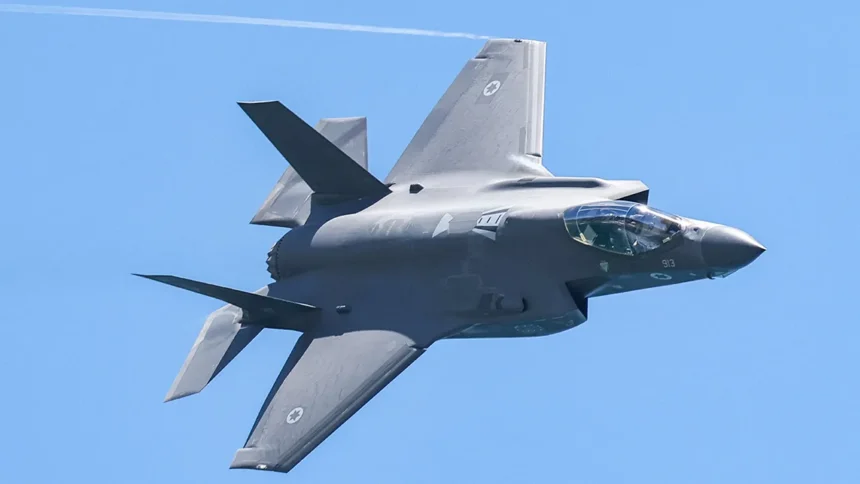
Rare-earth minerals are central to that arsenal. China currently processes the vast majority of the world’s rare-earth elements, essential for everything from electric vehicles to guidance systems and advanced radar. Each F-35 fighter jet requires hundreds of pounds of rare-earth metals in its engines, sensors, and weapons systems. Missile-defense batteries, electronic-warfare suites, and precision-guided munitions also rely heavily on them.
In recent years, Beijing has steadily tightened its grip. It has expanded export-control regimes to cover more rare-earth elements and processing technologies, adding license requirements and compliance rules that give China leverage over global supply. Meanwhile, US defense procurement rules are moving in the opposite direction: from January 2027, Pentagon contracts will phase out Chinese rare-earth content, forcing US suppliers to find or build alternative sources.
This creates what analysts describe as a vulnerability window measured in years, if not a decade. During this period, the United States is simultaneously burning through rare-earth-heavy munitions in conflicts like the Iran campaign while trying to establish new mines, processors, and magnet plants that do not yet exist at scale.
“The Iran war is consuming the interceptors. China is tightening the supply chain that builds the interceptors,” Perera wrote.
The Five-Year Plan is the document that formalizes this tightening into national strategy. Xi Jinping’s roadmap aims to ensure that the materials, robotics, and AI stack required to project power remain under Chinese control for the next 15 years.
If China succeeds in locking these capabilities into a single, state-directed system, the next global superpower contest may not be decided in dogfights over the Gulf, but inside supply chains and factories, long before an F-35 ever takes off. (Agency)