New Delhi:
Even as a Court of Arbitration (CoA) in The Hague moves forward with fresh hearings and document orders under the Indus Waters Treaty (IWT) framework, India has made it clear that it does not recognise the legitimacy of these proceedings and will not participate.
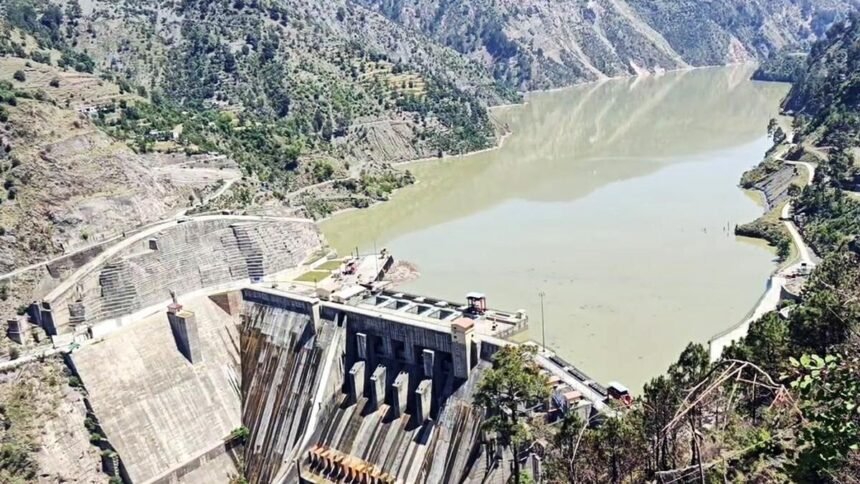
The latest flashpoint arose last week when the CoA, constituted under the IWT, directed that operational “pondage logbooks” from Indian hydroelectric plants be produced as part of the “Second Phase on the Merits.”

The court has scheduled hearings for February 2-3 at the Peace Palace in The Hague and noted that India has neither filed a counter-memorial nor indicated any participation.
For New Delhi, however, the entire exercise is moot.
Government sources told NDTV that the “so-called illegally constituted” CoA continues to “hold parallel proceedings (in addition to the neutral expert). Since we do not recognise the legitimacy of the CoA, we do not respond to any of its communications.”
“Additionally, as the IWT is in abeyance, India is not bound to respond. This is a tactic by Pakistan to involve us and show that we remain engaged,” the sources added.
Treaty in Abeyance, Strategy in Motion
The standoff traces back to April 23, 2025, a day after 26 civilians were killed in Pahalgam by Pakistan-linked terrorists, when India formally placed the Indus Waters Treaty “in abeyance.” For the first time since 1960, New Delhi explicitly linked water cooperation to Pakistan’s continued use of terrorism as state policy.
The move, alongside Operation Sindoor, marked a decisive shift in India’s Pakistan policy: cooperation cannot continue amid hostility.
Islamabad reacted frantically. In the nine months since, Pakistan has summoned envoys, rushed delegations to world capitals, written to the UN, initiated over ten legal actions, and held multiple international conferences—all centred on portraying India as targeting its most sensitive vulnerability.
Nearly 80-90% of Pakistan’s agriculture depends on the Indus River system. Its water storage barely covers a month of flow, and major reservoirs—Tarbela and Mangla—are reportedly near dead storage. What was once a technical treaty arrangement has now become a strategic pressure point.
The Hague Moves Ahead – Without India
Despite India’s stance, the Hague-based court is proceeding as if the treaty remains fully operational.
In an order dated January 24, 2026, the CoA laid out a hearing schedule for February 2-3, stating that Pakistan alone will present arguments at the Peace Palace if India does not attend.
Five days later, in another order, the court asked India to produce internal operational logbooks from the Baglihar and Kishanganga hydroelectric plants to examine whether India had historically “inflated” its pondage calculations. It warned that non-compliance could lead to “adverse inferences” or allow Pakistan to submit the same documents obtained through neutral expert proceedings.
The court also stated that India’s position on putting the treaty in abeyance “does not limit the competence of the court.” This is precisely the position India rejects.
Dual Track Dispute: Neutral Expert vs Court of Arbitration
Under the IWT dispute mechanism, technical differences go to a neutral expert, while legal disputes go to a Court of Arbitration. India maintains that the current issues fall under the neutral expert’s domain, and Pakistan’s move to activate the CoA amounts to “forum shopping.”
New Delhi’s refusal to engage with the CoA reflects this interpretation. By recognising only the neutral expert process, India signals that it will not allow Pakistan to broaden the dispute into a larger legal and political theatre.
The court’s latest orders attempt to bridge information between the two parallel processes—something India views as illegitimate.
Legal Drama with Strategic Undertones
The proceedings in The Hague are not just a legal dispute over hydroelectric calculations. They represent the first real test of India’s decision to leverage the treaty framework diplomatically after decades of restraint. For Pakistan, internationalising the issue is a survival imperative; for India, disengagement is a strategic choice.
The CoA may continue issuing orders, fixing hearings, and passing procedural directions. But without India’s participation and with the treaty in abeyance, the proceedings risk becoming a one-sided legal record rather than a binding adjudication.
In South Block’s view, that is exactly the point. India’s message since Pahalgam has been consistent: treaties cannot function in isolation from ground realities. Until Pakistan addresses what New Delhi calls “abnormal hostility,” even the world’s most cited water-sharing agreement will remain suspended in more ways than one. (Agencies)