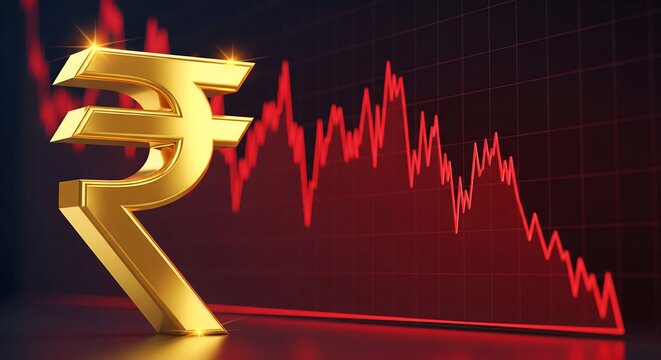
New Delhi, Mar 6: India could face pressure on the rupee, rising inflation, and a wider current account deficit if the ongoing Middle East conflict disrupts energy supplies and pushes up crude prices, Moody’s Ratings has warned.
The rating agency noted that India relies heavily on the region, importing about 46% of its crude oil and natural gas from the Middle East. Disruptions caused by the West Asia conflict, including blockages at the Strait of Hormuz—a key conduit for oil and LNG exports—could have serious economic consequences.

“Costly energy imports would weaken the rupee, raise inflation, worsen the current account balance, and complicate monetary and fiscal policy if subsidies are expanded to offset the shock,” Moody’s said.
Strait of Hormuz a critical risk point
Moody’s highlighted the global significance of the conflict, warning that a prolonged disruption in the Strait of Hormuz could trigger sustained supply shortages and Brent crude prices exceeding USD 100 per barrel. This would tighten financial conditions, slow global growth, and put immediate stress on energy-importing regions in Asia and Europe.
While short-term disruptions can be managed thanks to existing inventories and advance shipments, ongoing instability in the region raises risks of escalation with direct implications for global energy security.
Scenarios considered
Moody’s baseline scenario assumes a relatively short-lived conflict, with Brent crude averaging USD 70-80 per barrel in 2026—only slightly above the USD 69 average in 2025. This would limit the impact on India and the global economy.
However, under a prolonged conflict scenario, sustained crude prices above USD 100 per barrel could raise consumer and production costs worldwide, eroding household purchasing power, straining investment, and forcing central banks to maintain higher interest rates, thereby slowing global growth.
“Significantly higher oil prices for an extended period would exacerbate energy security concerns, especially for Europe and Asia, and tighten financial conditions globally,” Moody’s added.
India’s heavy dependence on Middle East energy imports makes the nation particularly vulnerable to these shocks, highlighting the need for strategic planning and diversification of energy sources. (Agency)