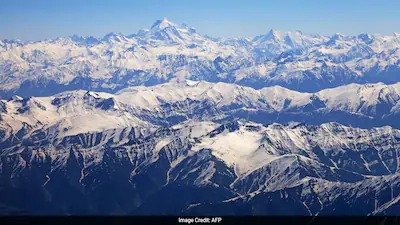
A new scientific study has found that the Himalayas may be receiving significantly more snowfall than previously estimated, suggesting that existing methods have substantially underestimated seasonal snow accumulation in the region.
The research revealed that earlier snowfall analyses underestimated total seasonal snowfall by 37 per cent over the Lake Hampta area in Himachal Pradesh during a single winter season.


The study, published in the journal Monthly Weather Review, was conducted by researchers from the British Antarctic Survey, the UK Met Office and the Indian Institute of Technology (IIT) Kharagpur.
According to the researchers, snowfall in the Himalayas has been inaccurately measured for years due to the challenges posed by rugged mountain terrain, despite snow being a vital source of freshwater and an essential part of the region’s water cycle.
To improve accuracy, the research team developed an innovative method using high-altitude frozen lakes as natural pressure sensors to monitor snowfall. Commercially available water-pressure sensors were installed in three lakes—Ghepan and Hampta in the western Himalayas, and Mugu Lake in Nepal.
Lead author Siddharth Gumber, a mountain climate scientist at the British Antarctic Survey, explained that unlike conventional instruments, the sensors measure snowfall across the entire lake surface, allowing scientists to accurately record both the timing and intensity of snowfall.
Based on the Archimedes principle of displacement, the sensors use changes in water pressure beneath the frozen lakes to directly estimate the mass of accumulated snow, providing more reliable and unbiased snowfall measurements.
The findings showed that the new model accurately reproduces both the timing and volume of snowfall, particularly during extreme snowfall events, making it suitable for generating long-term snowfall records.
Researchers said better snowfall estimates are essential for predicting snowmelt, managing river flows and improving water resource planning across the Himalayan region. They warned that as climate change increases the risk of water shortages, accurate snowfall measurements will play a critical role in helping communities and policymakers prepare for future challenges.(AGENCIES)