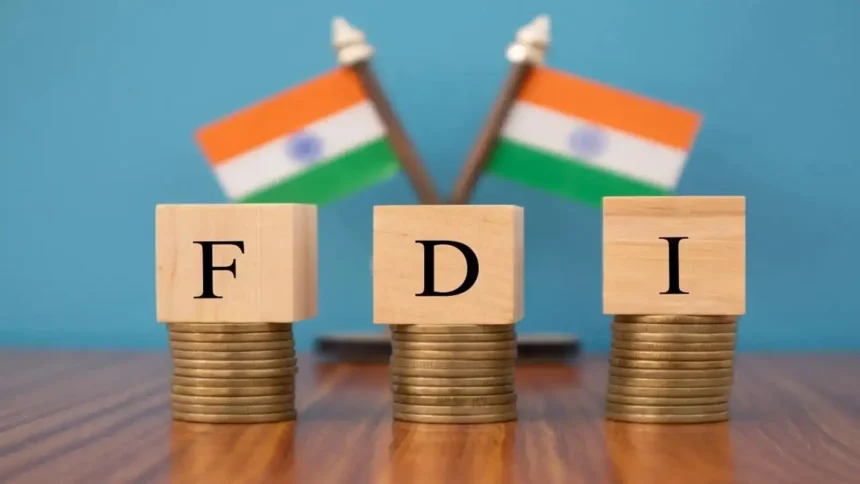
United Nations, Jan 22: Foreign Direct Investment (FDI) in India surged by 73 per cent last year, reaching $47 billion, according to a report by UNCTAD.

The increase was “mainly due to large investments in services — including finance, IT (information technology), and R&D (research and development) — as well as manufacturing, supported by policies aimed at integrating India into global supply chains,” the UN trade agency said in its Tuesday report.
India’s FDI growth rate was among the highest globally. Investments in data centres in India totalled $7 billion during the first three quarters of 2025, placing the country seventh among global recipients of data centre investments.
In the fourth quarter, FDI in the sector surged further, reflecting its growing dynamism. Notable announcements included:
- Google investing $15 billion in an AI hub in Andhra Pradesh in October.
- Microsoft committing $17.5 billion in AI, cloud infrastructure, and data centres in December.
- Amazon planning $35 billion in AI and other sectors, also announced in December.
These investments are expected to be spread over several years.
Global FDI trends
Globally, FDI increased by 14 per cent in 2025, reaching $1.6 trillion. According to UNCTAD, “industry trends in 2025 show that data centres now shape the FDI landscape; they accounted for one-fifth of global greenfield project values.” Announced investments in AI infrastructure and proprietary digital networks exceeded $270 billion.
The semiconductor sector also saw strong growth, with the value of newly announced projects rising 35 per cent. However, sectors exposed to tariff risks — including textiles, electronics, and machinery — saw project numbers drop sharply by 25 per cent.
Most FDI flows went to developed economies, which collectively saw a 43 per cent increase, amounting to $728 billion. In contrast, developing economies experienced a 2 per cent decline to an estimated $877 billion, with India being a notable outlier.
For the third consecutive year, FDI in China fell, declining 8 per cent to $107.5 billion, concentrated mainly in strategic and high-growth sectors.
Overall, UNCTAD said investor sentiment remained weak. “Headline growth overstates the recovery. Policymakers should focus on reviving real investment, not just financial flows,” it noted.
Reflecting cautious investor sentiment, the report highlighted:
- A 10 per cent decline in the value of international mergers and acquisitions.
- International project finance falling for the fourth consecutive year, down 16 per cent in value and 12 per cent in deal numbers, returning to 2019 levels.
- A 16 per cent drop in greenfield project announcements, although a few mega-projects drove high total project values. (Agencies)