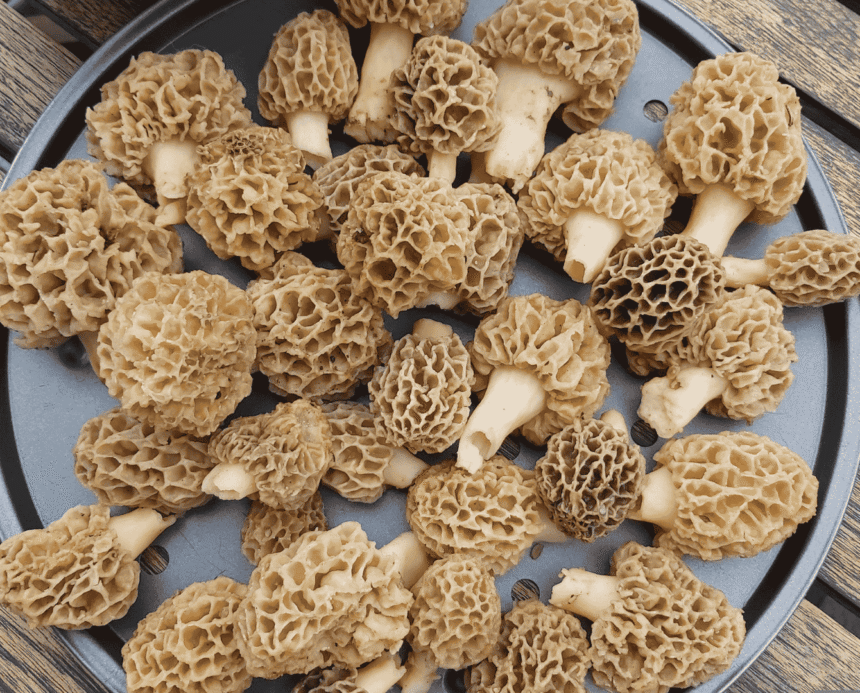
Bhaderwah, Apr 08: Rainy and damp weather over the past fortnight has turned the coniferous forests of J&K’s Bhaderwah into a rich source of the rare Kundi mushroom (earth cup fungus), bringing joy to locals, especially women who collect and sell it at good prices in the market.
‘Kundi’, a prized early spring delicacy that had nearly disappeared from Himalayan forests over the past few years due to dry weather, has reappeared in abundance this season. Its return has provided a steady source of income for hundreds of women in the region, as the edible fungus is in high demand among both locals and visitors in Bhaderwah markets.


Women begin their day at dawn, venturing into damp, lush forests under deodar trees in search of the elusive fungus. Rural women from villages across the Bhaderwah valley—including Bhudda, Chinta, Duggi, Kansar, Ghuraka, Chinchora, Jatani, Thubba, Dhumanda, Sartingal, Katyara, Mathola, Hanga, and Shankhoja—play a key role in gathering these mushrooms from the wild. They sell this seasonal delicacy in local markets at prices ranging between Rs 400 and Rs 700 per kg.
“We were disappointed as this beloved seasonal delicacy had disappeared over the past two to three years, but we are thankful that this year ‘Kundi’ has returned in abundance. Our group has been collecting it for the past 20 days,” said Kalyana (67) from Bhudda village.
“The recent rains have turned our forests into a treasure of Kundi. Traditionally, women go out to collect them, and now they can be found scattered across the dense cedar forests, bringing life to the otherwise quiet woods,” said Ajay Kumar (29) from Chinta village.
The sale of Kundi provides a vital source of livelihood for families in remote areas, with many walking long distances to sell their harvest in Bhaderwah markets. These days, almost every vegetable vendor in the town is seen displaying Kundi prominently, as it has become a major attraction for buyers.
“This year, I have sold the highest quantity of ‘Kundi’ since starting my business a decade ago. Most of the stock is pre-booked, and I even receive orders from Delhi,” said Anil Kumar, a vegetable vendor from Jaie Road, Bhaderwah.
“Over the past 20 days, I have sold Kundi worth Rs 5 lakh, and each woman earns around Rs 2,000 to Rs 3,000 daily by collecting and selling it,” he added.
Kundi typically grows in shaded, humid areas after snowmelt and spring rains. Apart from being a popular seasonal delicacy, it is also valued for its medicinal properties and unique taste, making it a staple in many local dishes. (Agency)