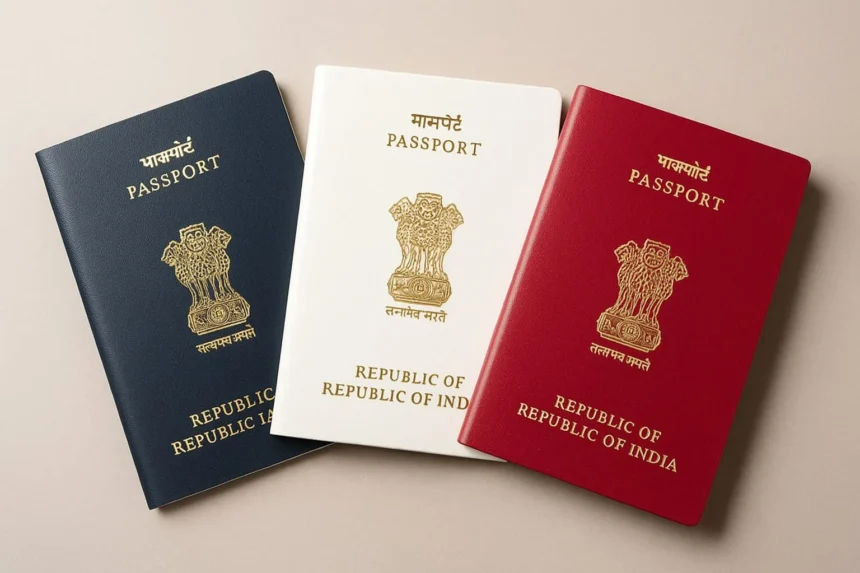
The Government of India has introduced a new set of passport regulations for 2026 aimed at simplifying the application process, enhancing security, and speeding up service delivery for applicants across the country. These updated rules, which will come fully into effect after February 15, are designed to make obtaining or renewing a passport more efficient while reducing opportunities for fraud and unnecessary delays. Applicants are advised to familiarize themselves with the new requirements well in advance to avoid last-minute rejections or processing setbacks.
Simplified Documents & Faster Verification
Under the new framework, the list of acceptable documents for passport applications has been streamlined and digitized to reduce paperwork. Key proofs, such as Aadhaar and other government-issued IDs, have been given priority, making it easier for applicants to meet requirements with fewer certificates and fewer visits to passport offices. Officials, however, have warned that applications submitted with incomplete or incorrect documents may be rejected, highlighting the importance of accuracy when uploading paperwork online.


One of the most significant improvements is the overhaul of the police verification process. Traditionally one of the lengthiest stages of passport issuance, verification will now be conducted largely through digital channels. Coordinated systems mean that, in many cases, police checks can be completed within days rather than weeks. In some situations, post-issue verification will be allowed, enabling a passport to be dispatched first and verified later, significantly streamlining the timeline for applicants.
Online Convenience & Accessibility
The application process has also been made more user-friendly. The government’s passport portal has been upgraded with enhanced features, allowing applicants to fill forms, upload documents, and book appointment slots online without the need for intermediaries. With increased emphasis on digital submission and real-time notifications, applicants can track their application status easily, reducing the uncertainty and anxiety previously associated with the process.
For minors, the updated rules clarify that parental consent, along with digital birth certificates or school IDs, will be accepted seamlessly, cutting down the time required for issuing children’s passports.
Additionally, the government plans to expand the number of passport centres nationwide, improving accessibility in smaller towns and rural areas.
The overall goal of the 2026 passport rules is to balance speed, security, and convenience, giving applicants a smoother experience from submission to issuance. Prospective applicants are advised to complete preparations well before the February 15 deadline to ensure compliance with the new norms. (Agencies)