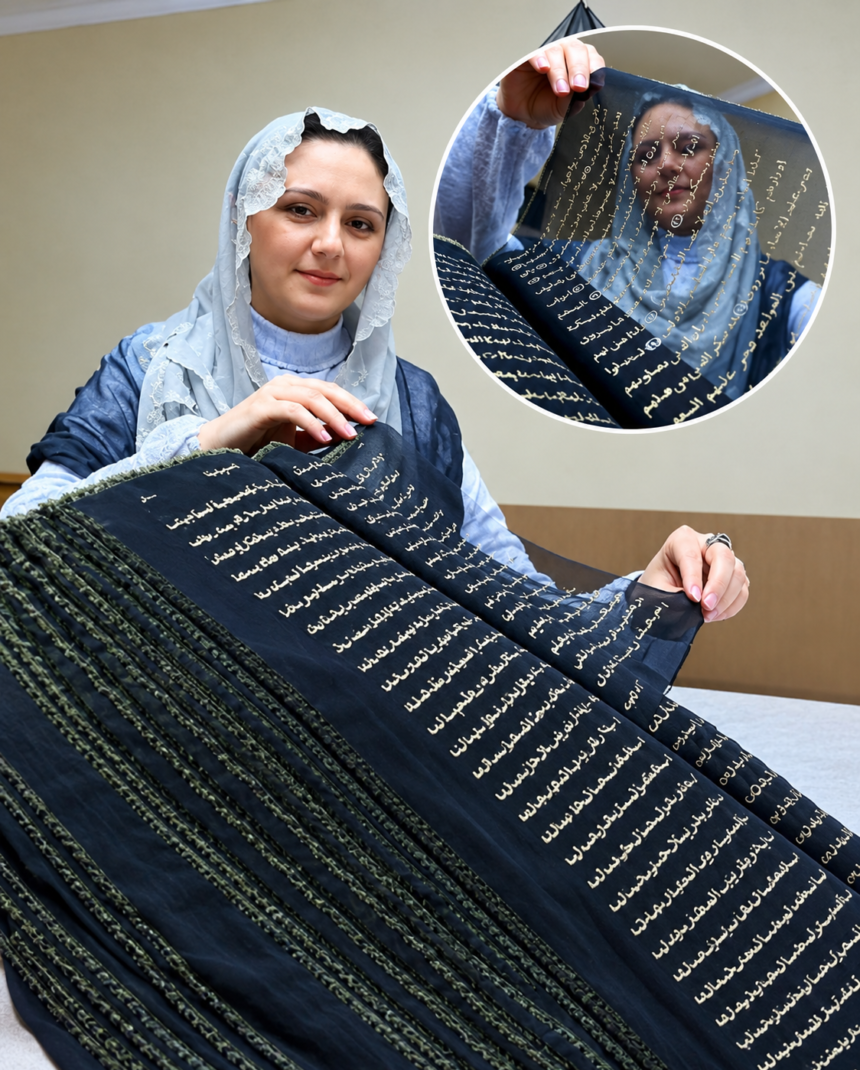
An Azerbaijani Muslim female artist has reportedly completed an extraordinary artistic project by writing the entire Holy Quran on silk, a painstaking work that took approximately three years to complete.
The project represents a remarkable combination of Islamic calligraphy, traditional craftsmanship and artistic dedication. Working with silk, a delicate and demanding material, the artist spent years carefully reproducing the sacred text, requiring patience, precision and sustained concentration throughout the process.

The completed work highlights the long-standing connection between the Quran and Islamic calligraphy, an art form in which the written word is presented with particular attention to beauty, proportion and precision. By choosing silk as the medium, the Azerbaijani artist has also brought a distinctive artistic dimension to the manuscript.
The three-year undertaking demonstrates the scale of effort involved in producing a handwritten Quran. Unlike printed copies, a handwritten manuscript requires the artist to individually reproduce the text while maintaining consistency across the entire work. Any work involving a sacred manuscript also demands particular care and respect for the accuracy and presentation of the text.
The achievement has attracted attention as an example of Azerbaijan’s cultural and artistic heritage, while also showcasing the role of women artists in preserving and presenting Islamic artistic traditions. The project brings together religious devotion, calligraphic skill and traditional textile craftsmanship in a single work.
The Quran has historically inspired generations of calligraphers and artists across the Muslim world, with manuscripts produced in a variety of scripts and artistic styles. The Azerbaijani silk manuscript adds another example to this long tradition, demonstrating how traditional religious art can continue to be expressed through different materials and creative approaches.
Completing the project after nearly three years makes it a significant personal artistic undertaking and a notable example of patience and craftsmanship. The work stands at the intersection of faith, culture, calligraphy and textile art, reflecting the enduring importance of Quranic manuscript traditions in Islamic culture.