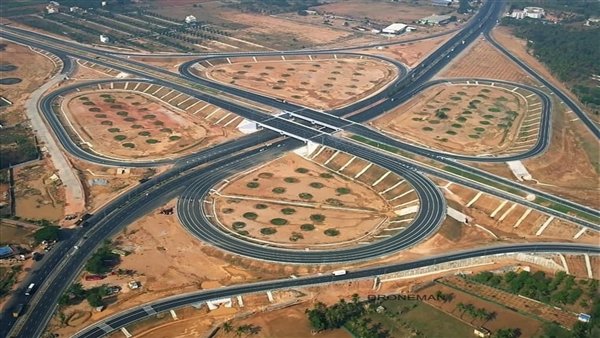
The Delhi–Amritsar–Katra Expressway, the fifth major expressway being developed in the country, is slated for completion by March 2027, a senior official of the National Highways Authority of India (NHAI) said on Wednesday.
Construction of National Expressway-5 (NE-5), which began in April 2021, slowed significantly last year due to Operation Sindoor, along with heavy rains and floods across northern states.

Once completed, the project is expected to substantially enhance regional connectivity, promote religious tourism, and facilitate faster mobility for the armed forces, the official said. The expressway will reduce the distance between Delhi and Katra from 727 kilometres to 588 kilometres, cutting travel time from 14 hours to about six hours.
Speaking to mediapersons, NHAI (Project Implementation Unit Jammu), said construction had been severely impacted last year following Operation Sindoor and subsequent flooding. “However, work has now regained momentum, and the deadline for completion has been fixed for March 2027,” he said.
Kumar noted that NE-5 has been conceptualised as a religious corridor, supplementing existing air and rail connectivity. “It will connect two major pilgrimage destinations — Sri Harmandir Sahib (Golden Temple) in Amritsar, Punjab, and the Mata Vaishno Devi shrine in Katra, Reasi district of Jammu and Kashmir,” he said.
Currently, a large number of devotees visiting Mata Vaishno Devi rely primarily on rail and air travel. The expressway will offer a third option, enabling travel between Delhi and Katra in approximately six hours.
Highlighting the challenges faced during construction, Kumar said only five to six months of effective work could be carried out last year. “Retaining manpower during tense security situations was a major challenge. Many workers left due to safety concerns and had to be persuaded to return. Additionally, heavy rains washed away two bridges, disrupting supply lines,” he said.
Strategically, the expressway holds importance for Jammu and Kashmir due to its proximity to the International Border. “Running parallel to sensitive border areas, the corridor will facilitate faster deployment and improved mobility for defence forces,” Kumar added.
He further said advanced segmental bridge construction technology — previously used in projects like the Delhi Metro and Dwarka Expressway — is being employed for this project.
Packages 15 and 16 along the Jammu–Samba stretch include an elevated corridor of nearly 21.5 kilometres, which posed challenges due to heavy traffic movement. However, the target was achieved using segmental bridge construction technology without disrupting traffic flow, the official said.
Keeping the upcoming annual Amarnath Yatra in view, the NHAI has set a target to complete nearly 30 kilometres of the Jammu–Kathua stretch before the start of the pilgrimage later this year. (Agency)