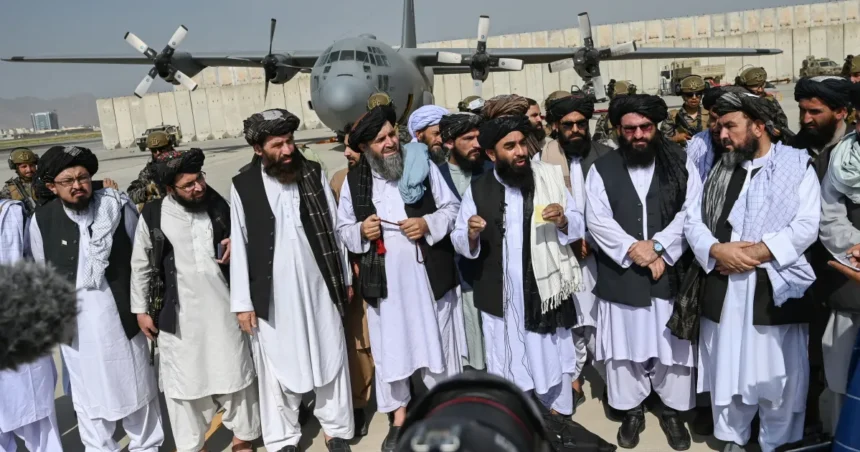
The Taliban has formally codified a class-based justice system in Afghanistan under a newly enacted Criminal Procedure Code signed by its supreme leader, Hibatullah Akhundzada, a move that has drawn sharp criticism from human rights groups and renewed international concern over the country’s legal and political direction.
Issued on January 4, 2026, and circulated to courts nationwide, the 119-article code, obtained by Afghan human rights organisation Rawadari, explicitly legalises social hierarchy within the justice system. Critics say it represents a major departure from basic principles of equality before the law.

Hierarchy-Based Justice
Article 9 divides Afghan society into four categories: religious scholars (ulama or mullah), the elite (ashraf), the middle class, and the lower class. Punishments under the code are no longer primarily determined by the crime itself but by the social status of the offender.
Religious scholars receive only advice for offenses, members of the elite face court summons and guidance, middle-class individuals may be imprisoned, and lower-class individuals risk both imprisonment and corporal punishment.
Human rights advocates warn that this framework effectively grants clerics near-total immunity while exposing poorer and marginalised Afghans to harsher penalties. “This is not a justice system; it is a legally codified hierarchy of privilege,” Rawadari said, noting that the code institutionalises discrimination.
Legal Recognition of Slavery
The code also repeatedly distinguishes between “free” individuals and “slaves,” effectively legalising a practice banned under international law. Human rights experts say this marks a sharp departure from modern criminal law principles, where punishments should be proportionate to the crime and based on individual responsibility, not social background.
Erosion of Due Process
Beyond social stratification, the code removes many basic legal protections. It does not recognise the right to a defence lawyer, the right to remain silent, or the right to compensation for wrongful punishment. Guilt is primarily determined through “confession” or testimony, without independent investigation, and the law lacks clear minimum or maximum penalties.
Corporal punishment, including flogging, is expanded, and vaguely defined offenses such as “dancing” or attending “gatherings of corruption” give judges broad discretion to punish ordinary social or cultural activities.
International and Human Rights Concerns
Observers say the new code signals that the Taliban is not merely enforcing harsh laws but restructuring the entire legal system around privilege, loyalty, and religious status. “By placing clerics and elites above the law, the Taliban has effectively made some people untouchable while others are permanently disposable,” Rawadari said.
The organisation has called for immediate suspension of the code and urged the United Nations and the international community to act to prevent its enforcement. Rawadari will continue monitoring the implementation of the code and publish regular reports.
As Afghanistan becomes increasingly isolated, the new criminal code sends a stark message: under Taliban rule, justice is no longer blind—it is selective, stratified, and aligned with power. (Agencies)