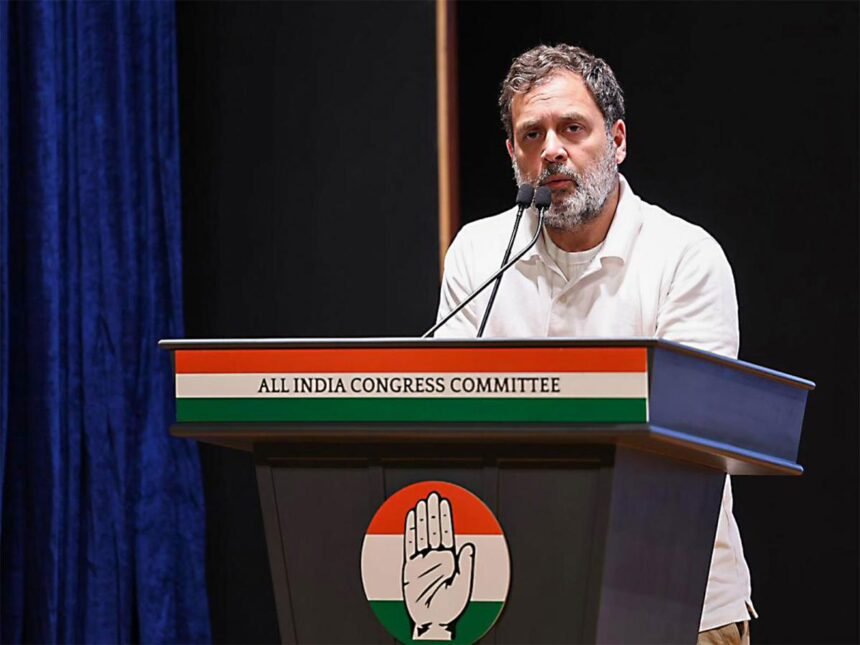
New Delhi, February 14: Leader of Opposition in the Lok Sabha and Congress MP Rahul Gandhi on Saturday accused Prime Minister Narendra Modi and the Centre of misleading the country over tariff provisions in the India–US interim trade agreement, alleging that the deal could adversely affect India’s cotton farmers and textile exporters.
Gandhi said that while Indian garments face an 18 percent tariff in the United States, Bangladesh has been granted zero percent tariff access for garment exports on the condition that it imports American cotton.

Questioning the policy framework, he argued that importing American cotton would hurt domestic farmers, while refusing to do so would disadvantage the Indian textile industry.
He also claimed that Bangladesh was signalling a possible reduction or halt in cotton imports from India, which, he said, could further impact Indian producers.
In a post on X, Gandhi alleged that the government had not disclosed the full implications of the agreement. He said that when he raised the issue in Parliament regarding the concession granted to Bangladesh, a minister replied that India would also have to import cotton from the US to avail similar benefits. He questioned why this aspect was not shared earlier with the public.
The Congress leader maintained that the agreement could push millions toward unemployment and economic distress, stating that a trade deal in the national interest should protect both cotton farmers and textile exporters.
He criticised the government’s handling of negotiations, saying the policy framework placed India in a difficult position — either import American cotton and affect domestic farmers or face competitive disadvantages in textile exports.
The India–US Interim Agreement, announced last week, is aimed at creating a framework for a reciprocal and mutually beneficial trade pact between the two countries.
Under the agreement, tariffs on several US industrial and agricultural products — including dried distillers’ grains, red sorghum for animal feed, tree nuts, fruits, soybean oil, wine and spirits — will be reduced or eliminated.
In return, the United States will impose an 18 percent reciprocal tariff on selected Indian goods such as textiles, apparel, leather, footwear, plastics, rubber, organic chemicals, home decor items and certain machinery. However, once fully implemented, US tariffs on products including generic pharmaceuticals, gems and diamonds, and aircraft parts are expected to be removed. (Agencies)