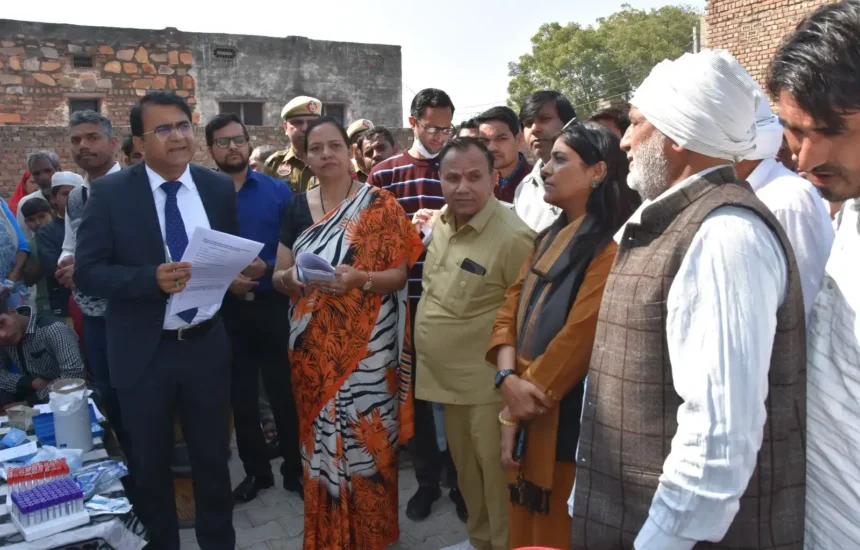
At least 12 people, including five children, have died over the past 15 days in Chayansa village of Palwal, Haryana, prompting a health department probe amid rising concerns over contaminated drinking water and the possible spread of infectious diseases.
Health officials said the deaths, reported between late January and mid-February, were linked to severe liver-related complications. Preliminary findings suggest viral hepatitis and suspected water contamination as possible causes.
The first jaundice-related deaths were reported on January 31 in Chayansa, a village with a population of around 5,700 and 865 households. A rapid response team was deployed the following day. Since then, medical camps have been set up, door-to-door surveys conducted, and large-scale health screenings carried out.
Seven of the deaths occurred between January 27 and February 11, with four attributed to acute hepatitis or liver failure. The victims ranged in age from nine to 65 years. Other reported deaths are currently under review. Most patients had complained of fever, abdominal pain, vomiting, and jaundice before their condition worsened.
The fatalities come weeks after 16 people died due to toxic water contamination in Indore, Madhya Pradesh, raising broader concerns about drinking water safety across the country.
Palwal Chief Medical Officer Satinder Vashisth said extensive screening and testing are underway. “So far, around 1,500 people, including close contacts of the deceased, have been screened. Nearly 800 outpatient consultations have been conducted, and blood samples have been tested for Hepatitis A, B, C, and E,” she said.
Blood analysis of 210 individuals revealed two positive cases of Hepatitis B and nine of Hepatitis C. All samples tested negative for Hepatitis A and E, while scrub typhus results are awaited. Three patients were hospitalised and are reported to be in stable condition.
Out of 107 household water samples collected so far, 23 failed quality checks, indicating bacterial contamination and inadequate chlorination. Coliform bacteria were detected in storage tanks during subsequent testing. Chlorine was found to be absent in several samples before corrective measures were initiated.
Residents depend on piped water supply, underground storage tanks, and tanker deliveries. Reverse Osmosis-treated water has been brought in from neighbouring areas. Irregular refilling and poor disinfection of underground tanks have heightened fears of waterborne infections.
Officials confirmed that leptospirosis tests returned negative, and veterinary inspections ruled out animal-linked transmission. As a precaution, nearly 15,000 halogen tablets have been distributed for water purification, and a helpline (01275-240022) has been set up for residents.
A senior health official said the investigation is ongoing. “We are examining medical, environmental, and behavioural factors to determine the exact cause of the deaths,” the official said, adding that surveillance and medical camps will continue until the situation stabilises. (Agencies)