It is 85 seconds to midnight on the Doomsday Clock in Chicago, and amid multiple conflicts in West Asia and the ongoing war in Ukraine, humanity has never stood closer to the threat of nuclear catastrophe.
Against this backdrop, the United States on February 5, 2026, chose not to extend the New START treaty with Russia—the last remaining nuclear arms control agreement between the Cold War rivals. With its expiry, both countries are no longer bound to limit deployed strategic nuclear warheads to 1,550 each or cap delivery systems at 700 (with a total of 800 launchers), effectively opening the door to a renewed nuclear arms race.

The timing is particularly concerning as Russia continues to modernise its delivery systems. Deputy Foreign Minister Sergei Ryabkov recently told state media RIA that Russia’s “nuclear triad”—land-, air- and sea-based weapons—has reached an “advanced stage” of development.
By removing limits on deployed warheads, the lapse of New START risks further destabilising already volatile regions such as Ukraine and West Asia, while also raising alarm bells in Asia—especially for India, which is geographically positioned between two nuclear-armed rivals, China and Pakistan.
Elsewhere in the region, North Korea, which has long justified its nuclear programme by pointing to the United States, is likely to remain on high alert. The removal of US-Russia caps, even if temporary, could accelerate the expansion of Pyongyang’s estimated stockpile of around 50 nuclear warheads.
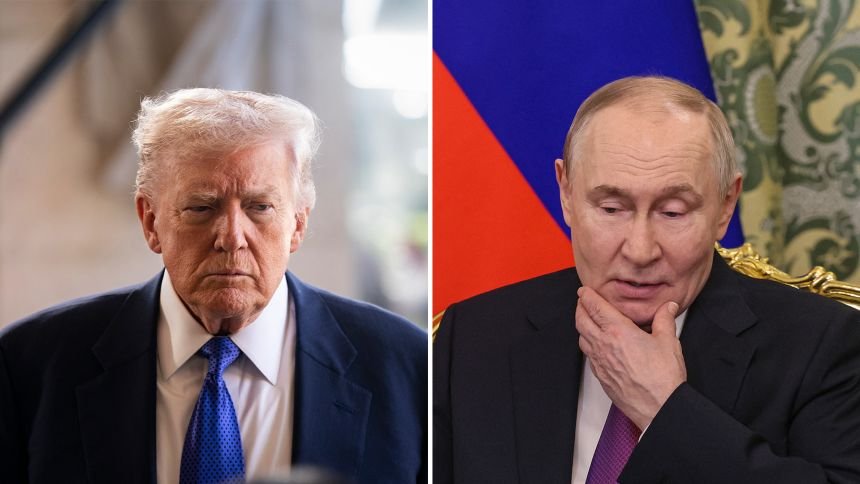
Commenting on the treaty, US President Donald Trump told The New York Times, “If it expires, it expires,” while blaming former president Joe Biden for negotiating a poor deal—despite Biden having only exercised the treaty’s provision to extend it by five years. Trump has instead called for a new arms control framework that includes China, a demand reiterated by Secretary of State Marco Rubio just 24 hours before New START lapsed, when he said arms control would be “impossible” without Beijing.
China, however, has rejected the proposal. While expressing regret over the treaty’s expiry, Beijing said it would “not participate in nuclear disarmament negotiations at this stage.”
What it means for India
China factor
This development is likely to worry India. A June 2025 report by the Stockholm International Peace Research Institute estimated that China possesses at least 600 nuclear warheads and has been expanding its arsenal by roughly 100 warheads annually since 2023. Although Beijing maintains that its nuclear posture is purely “self-defensive” and adheres to a “no first-use” policy, it has resisted any move to cap its stockpile.
For India, which has an estimated 180 nuclear warheads and follows a doctrine of credible minimum deterrence, this asymmetry is significant. A Chinese commitment to limits under a broader arms control treaty could help ease Indian concerns and potentially reduce tensions along the contested border.
Pakistan dimension
On India’s western front, Pakistan is estimated to possess around 170 nuclear warheads, most of which are reportedly in storage. The Nuclear Threat Initiative noted in November 2025 that Pakistan is producing enough fissile material to manufacture at least 14 nuclear warheads annually.
Nuclear tensions between India and Pakistan have intensified since Operation Sindoor—India’s military response in May 2025 to the Pahalgam terror attack, which New Delhi said was orchestrated by Pakistan-backed groups.
Even if Pakistan were not included in a renewed START-style agreement, US-Russia caps could have a stabilising ripple effect, discouraging unchecked expansion elsewhere and offering India some strategic breathing space.
The broader picture
The expiry of New START did not come without warning; its timeline was well known. But the larger issue lies beyond this single treaty.
Since the Strategic Arms Limitation Talks (SALT-1) in 1972, global nuclear stockpiles have steadily declined. Under SALT-1, launchers were capped at 2,358 ICBM and SLBM systems per side, helping avert catastrophe—even if that assessment benefits from hindsight.
Today’s reality is markedly different. The world has shifted from a bilateral US-Russia nuclear standoff to a multipolar nuclear order involving several armed states. Any future arms control framework must reflect that shift.
In this context, Trump’s argument that China must be part of any new treaty carries weight. Asia can no longer remain outside the global nuclear equation.
However, allowing New START to expire—at a time when Russia is locked in a high-intensity confrontation with Europe and the war in Ukraine shows no sign of resolution—may not have been the wisest course. The absence of constraints, even temporary ones, increases uncertainty in an already fragile global security environment. (Agencies)