Iran Strikes in Strait of Hormuz, 19 Ships Damaged, 7 Killed; Two Indian Tankers Transit Safely
As many as 19 ships have been targeted by Iran in the Strait of Hormuz, resulting in the deaths of seven people. While two Shipping Corporation of India (SCI) tankers—Pushpak and Piramal—successfully crossed the Strait this morning, the situation along the Persian Gulf–Hormuz–Gulf of Oman sea lane remains highly precarious. Iranian authorities are still refusing to allow crude oil tankers to be escorted by warships.

Although the SCI tankers managed to transit without escort between last night and this morning, three other tankers were struck by Iranian projectiles and sustained damage. A shipping expert said, “There is utter confusion in the Persian Gulf as Iran is sending mixed signals. Escorts are not being allowed, and tankers are taking considerable risks.”
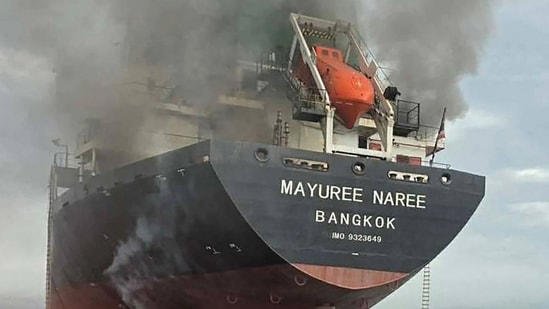
The Kandla-bound Thai vessel Mayuree Naree was hit on its hull while passing through the Strait of Hormuz.
The passage of two Indian ships alongside attacks on others indicates that Iran is using Hormuz as a strategic chokepoint to trigger a global energy crisis and pressure the US and Israel. Tehran is also targeting Sunni Gulf countries to expand the conflict theatre and punish them for hosting US bases. These attacks violate the UN Convention on the Law of the Sea (UNCLOS), Articles 37–45, which guarantee freedom of navigation.
On Wednesday night, the UN Security Council adopted a resolution invoking Article 51 of the UN Charter—affirming member states’ collective and individual right to self-defense—against retaliatory attacks by Iran across the Gulf. The resolution, sponsored by 134 countries, passed with 13 votes in favor and two abstentions from China and Russia.
Iran’s strikes on Gulf shipping aim to create both a global oil crisis and a food supply disruption in the Middle East. Sunni Gulf countries, while defending themselves from Iranian missiles, have refrained from overt retaliation, reportedly to avoid appearing aligned with the US or Israel. However, Gulf states are believed to be considering covert responses in the future.
Iran has been using kamikaze drones to target shipping, and there are indications the IRGC may also be deploying underwater drones or projectiles, though no evidence of mines has been confirmed. The hull damage to the Thai tanker suggests underwater targeting may be involved.
With Iran continuing to leverage the Strait of Hormuz for military advantage, the global energy crisis is expected to persist until either the Iranian regime negotiates with the US or faces internal collapse. (Agencies)