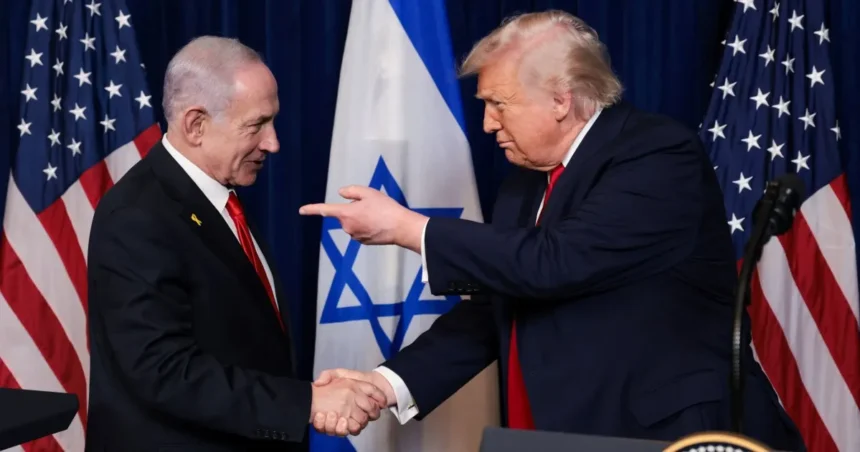
Benjamin Netanyahu argued that Donald Trump had a chance to make history by helping eliminate an Iranian leadership long opposed by the West and many Iranians, the report said. He also suggested that such a move could trigger a popular uprising to overthrow the theocratic system that has ruled Iran since 1979 and has long been seen as a source of global instability.
The first bombs were dropped on February 28, Saturday morning. By evening, Trump announced that Ali Khamenei was dead.
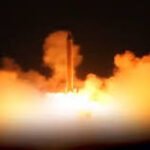
Responding to queries, White House spokesperson Anna Kelly did not directly comment on the reported call between Trump and Netanyahu. She said the operation aimed to “destroy Iran’s ballistic missile and production capacity, dismantle its navy, end its ability to arm proxy groups, and ensure it can never develop a nuclear weapon.”
Neither Netanyahu’s office nor Iran’s representative at the UN responded to requests for comment.
At a news conference, Netanyahu dismissed as “fake news” claims that Israel had dragged the US into the conflict. “Does anyone really think someone can tell President Trump what to do?” he said. Trump, too, has maintained that the decision to strike was his alone.
The report, based on officials familiar with the discussions, does not suggest that Netanyahu forced Trump into war. However, it indicates that the Israeli leader strongly advocated the move, framing it around eliminating an Iranian leader allegedly linked to plots against Trump — an argument that appeared to resonate with the US President.
US Defence Secretary Pete Hegseth later suggested that revenge may have been one of the motivations, stating, “Iran tried to kill President Trump, and President Trump got the last laugh.”
Trump had campaigned in 2024 on an “America First” policy, signalling a preference to avoid war with Iran and pursue diplomacy. However, as nuclear negotiations stalled, he increasingly considered military options, according to officials familiar with internal deliberations.
The first phase of the conflict began in June, when Israel struck Iran’s nuclear and missile facilities, killing several senior figures. The US later joined with strikes on key sites in Natanz, Isfahan and Fordow using bunker-buster bombs. After the 12-day campaign, Trump claimed the operation had “obliterated” Iran’s nuclear capabilities.
In the following months, discussions continued between the US and Israel over further military action, even as Washington showed interest in reviving talks with Tehran. Israel, meanwhile, continued to target Iran’s top leadership, including Khamenei, whom it viewed as a long-standing strategic adversary.
Israeli officials initially planned operations assuming they would act alone, Defence Minister Israel Katz said in an interview. During a December meeting at Trump’s Mar-a-Lago residence, Netanyahu reportedly expressed dissatisfaction with earlier results, while Trump signalled openness to further action alongside diplomatic efforts.
Two developments — a US operation capturing Nicolas Maduro and widespread anti-government protests in Iran — reportedly pushed Trump closer to approving another strike. Behind the scenes, coordination between the Israeli military and US Central Command intensified through joint planning.
During a February visit to Washington, Netanyahu briefed Trump on Iran’s expanding missile programme and the risks it posed, including potential threats to the US mainland.
By late February, many US officials believed a strike was imminent. Trump received intelligence briefings outlining both the potential gains and risks, including likely retaliation by Iran against US forces and allies.
That assessment proved accurate. The strikes triggered Iranian counterattacks, significant casualties, disruption in the Gulf region, and a surge in global oil prices following the closure of the Strait of Hormuz.
Trump was also told that removing Iran’s leadership might open the door for a more negotiable regime. Netanyahu reportedly used this argument in his final pitch before Trump authorised the operation.
However, the Central Intelligence Agency had assessed that any successor to Khamenei would likely be a hardliner, casting doubt on the prospects of moderation.
Following Khamenei’s death, Trump called for an uprising in Iran. As the conflict entered its fourth week, the country remained tense, with security forces on the streets and millions staying indoors.