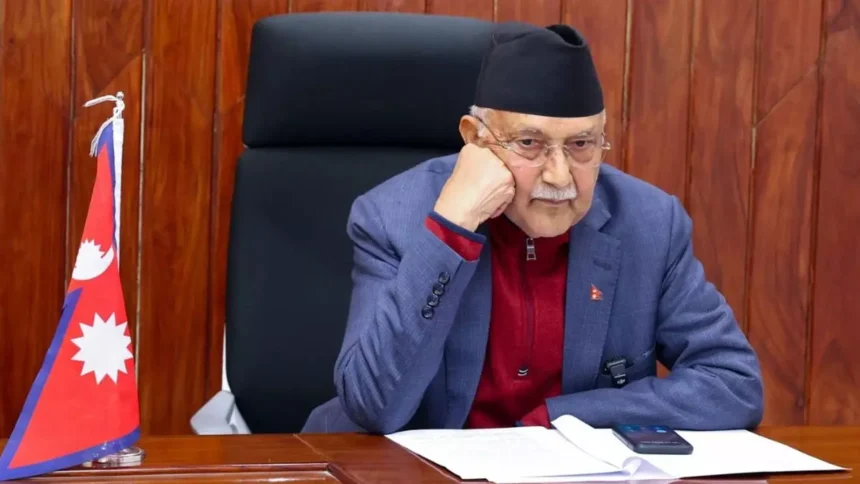
New Delhi, Mar 28: Nepal Police have arrested former Prime Minister KP Sharma Oli and former Home Minister Ramesh Lekhak in connection with last year’s crackdown on Gen Z protests, according to a report by The Himalayan Times.
Oli, who also serves as chairman of the Communist Party of Nepal (Unified Marxist–Leninist), was taken into custody early Saturday morning from his residence in Gundu, Bhaktapur, after police had attempted to detain him since the previous night. Lekhak was arrested separately from his home in Kutunje, Bhaktapur.

The arrests are linked to the September 8–9 protests last year, during which at least 19 people were killed. Authorities allege that senior officials were involved in ordering or overseeing actions that led to the deaths.
Following the arrests, current Home Minister Sudan Gurung said in a Facebook post, “Promise is a promise: No one is above the law. This is not vengeance against anyone; it is simply the beginning of justice,” adding that the country is moving in a “new direction.”
This marks a significant moment in Nepal’s political history, as it is the first time a former prime minister has been detained in connection with a criminal investigation involving protest-related deaths.
According to the report, the arrests follow the findings of a commission of inquiry led by Gauri Bahadur Karki, which submitted its report earlier this week. The report named Oli, Lekhak, former police chief Chandrakuber Khapung, and others for alleged violations under Section 182 of the Criminal Code 2017, which deals with negligent killing and carries a maximum penalty of up to three years in prison along with a fine.
The move came shortly after newly appointed Prime Minister Balendra Shah assumed office. In its first meeting, the new cabinet decided to implement the commission’s recommendations, paving the way for legal action. Officials said administrative and legal preparations were completed overnight to carry out the arrests.
The developments signal a major political shift in Nepal, with authorities indicating a tougher stance on accountability in cases involving state action during protests. (Agency)