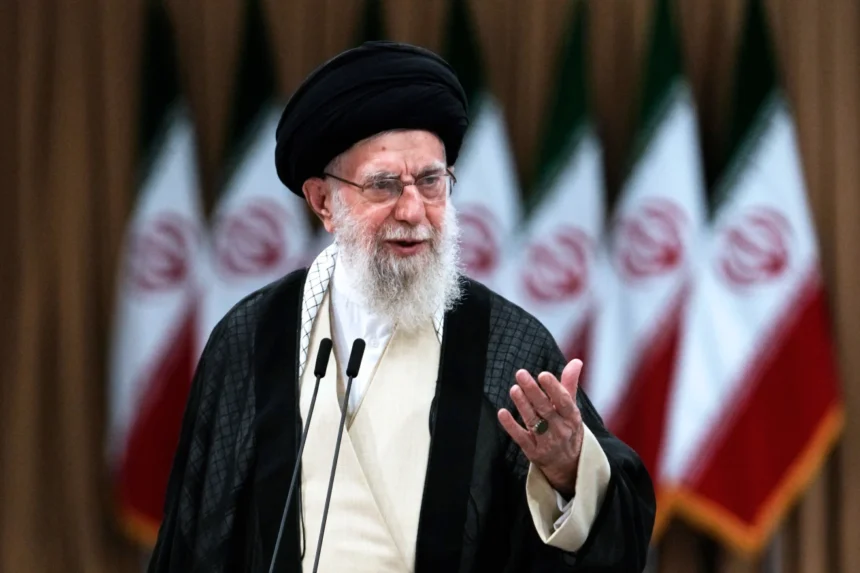
Iran’s Supreme Leader, Ayatollah Ali Khamenei, was killed in a coordinated US–Israel strike in central Tehran on Saturday morning, following months of surveillance and operational planning, according to US officials and media reports.
Officials said the joint operation had been in preparation for months, during which US and Israeli intelligence tracked Khamenei’s movements and monitored senior Iranian military and security officials.

How Israel and the US tracked and killed Ayatollah Khamenei:
A Reuters report stated that a high-level meeting was intercepted by Israeli intelligence on Saturday morning. Two Iranian sources told Reuters that Khamenei had met with Ali Shamkhani and Supreme National Security Council Secretary Ali Larijani at a secure location shortly before the strikes. US sources revealed that confirmation of Khamenei’s meeting with his top advisers triggered the joint Israeli–US air and naval operation.
The New York Times reported that the intelligence originated from the CIA and was passed to Israel to carry out the strike. A US official told Reuters that the operation was designed to target Khamenei first, in order to preserve the element of surprise, amid concerns that he might go into hiding if the opportunity was missed.
Why Saturday was chosen to target Ayatollah Ali Khamenei:
The operation was carried out around 09:40 local time during the Muslim holy month of Ramadan and at the start of Iran’s workweek. Israeli jets, which require about two hours to reach Tehran, launched long-range munitions at a compound in central Tehran.
When the decision was made, Israeli aircraft reportedly dropped 30 bombs on the compound. Multiple munitions were likely required to penetrate an underground bunker believed to be used by the Supreme Leader for protection.
What’s next after Khamenei’s assassination:
Iran had reportedly put succession plans in place not only for Khamenei but also for other senior officials. The implications of his killing for the trajectory of the conflict remain unclear.
US had damaged Iran’s uranium enrichment facilities in 2025:
During last June’s 12-day war, Israel targeted scientists and officials linked to Iran’s nuclear programme and was reported to have penetrated telecommunications and mobile phone systems to track individuals, including bodyguards connected to key figures. This monitoring helped build “patterns of life” to identify vulnerabilities.
President Donald Trump declared last year that US strikes had “obliterated” Iran’s nuclear programme. However, a senior US official, speaking on condition of anonymity, said Tehran had begun rebuilding damaged infrastructure. Intelligence assessments indicated that Iran had developed the capability to domestically produce high-quality centrifuges, a key component for enriching uranium to weapons-grade levels. (Agency)