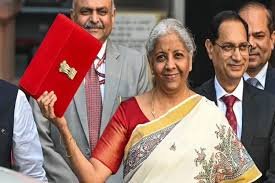
As the Union Budget 2026 approaches, economists are sharing their views on the government’s priorities and possible announcements. Osmania University Professor Satish Raikindi outlined his expectations, highlighting key sectors likely to receive focus.
Speaking to ANI, Raikindi said the Government of India is expected to prioritise job creation, agricultural development, inclusive manufacturing, and digital transformation. These sectors, he noted, are crucial for driving sustainable growth across the country.

He further stated that the Budget may focus on several critical areas, including defence, infrastructure development—particularly railways—MSMEs, rural development, and the green economy. These sectors are likely to receive significant attention and investment. Raikindi also believes the government may announce measures to address public concerns and provide relief to the common man.
“The Indian economy is playing a vital role, and for sustainable growth, we can look forward with optimism,” Raikindi said. “The government is prioritising job creation, agriculture, inclusive manufacturing, digital transformation, rural-urban integration, and the green economy. Every common man is expecting relief in tax slabs, affordable housing, healthcare, employment, and education. This Budget may focus on defence, infrastructure such as railways, MSMEs, rural development, and the green economy.”
Osmania University Professor M Ramulu also shared his expectations and concerns regarding the upcoming Union Budget 2026. According to him, current investment trends in India are tilted towards capital-intensive industries, particularly in the industrial and manufacturing sectors, where growth rates and profits are high.
Ramulu stressed the need for investments to reach smaller sectors such as startups, small-scale industries, and area-based industries. He pointed out that most investments are currently concentrated in capital cities and metropolitan areas, leading to environmental issues, pollution, and excessive population density.
“Most capital is flowing into capital-intensive industries with high growth and profits,” Ramulu told ANI. “Investments should also percolate to startups, small-scale industries, and decentralised units. I expect this Budget to promote investments across all states, especially in agro-based industries, small manufacturing units, and decentralised industries, instead of focusing only on large industries.”
He also highlighted the need for a more targeted approach to welfare schemes. Ramulu noted that benefits often reach economically stable individuals, while the truly needy are left out.
“While 70–80 per cent of the population may be receiving welfare benefits, less than 20 per cent of the poor are actually benefiting,” he said. “Welfare should not be limited to free rice alone. Education and healthcare are being neglected. Proper identification of beneficiaries can reduce unnecessary expenditure and convert savings into productive investments.”
On the Goods and Services Tax (GST), Ramulu acknowledged its advantages but raised concerns over revenue distribution between the Centre and states. He suggested adopting a horizontal approach by lowering tax rates to bring more people into the tax net.
“GST is a good system, but distribution remains a major concern,” he said, adding that balanced development across states is essential. “Lower tax rates will encourage voluntary income disclosure and expand the tax base.”
Ramulu also spoke about the roles of the private sector and the government, noting that while private institutions and companies are expanding rapidly, the government sector is shrinking. He stressed the need to ensure that private-sector gains are reinvested productively for public benefit.
Emphasising efficient resource utilisation, rationalisation of welfare schemes, and balanced taxation, Ramulu said, “If available resources, including human resources, are used efficiently, the growth rate will definitely increase.” (Agencies)