UN Chief: US Acting with Impunity, Prioritizing Power Over International Law

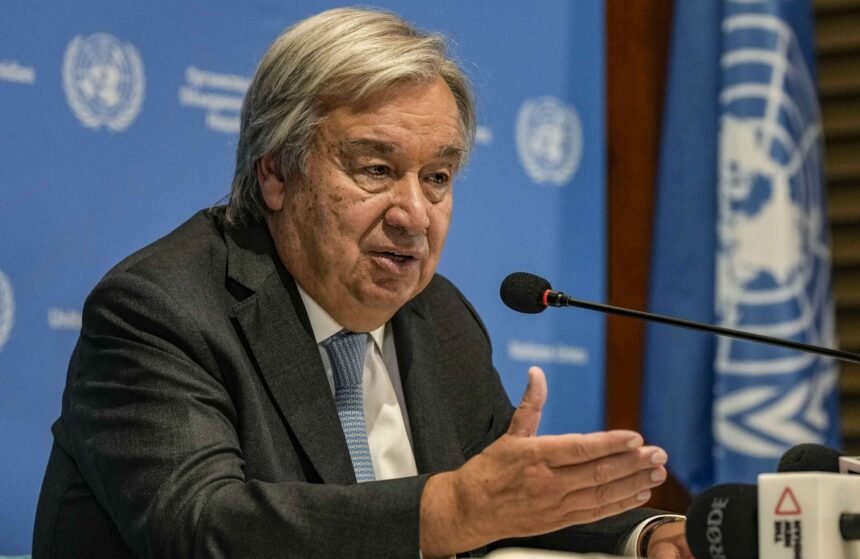
The United States is acting with impunity and appears to value its power above international law, UN Secretary-General António Guterres told the BBC.
Speaking to BBC Radio 4’s Today programme, Guterres said Washington’s “clear conviction” is that multilateral solutions are irrelevant, with the country instead relying on its own influence, sometimes guided by international law norms.
His comments come amid recent US actions, including the seizure of Venezuela’s president, and former President Donald Trump’s repeated threats to annex Greenland.
Guterres warned that the founding principles of the UN, including the equality of member states, are under threat. He said the organization is struggling to make member nations abide by the international laws enshrined in the UN Charter.
“The UN is extremely engaged in solving major global conflicts,” he said. “But the UN has no leverage — the big powers have stronger leverage. The question is whether that leverage is used to produce lasting solutions or just temporary fixes.”
He emphasized the need for UN reform to address the “dramatic problems and challenges” facing its 193 member states. “There are those who believe the power of law should be replaced by the law of power,” Guterres said.
The Secretary-General criticized the UN Security Council, saying it no longer represents the world and has become ineffective. Any of the council’s permanent members — France, China, Russia, the UK, or the US — can veto resolutions, a power that has been used by Russia and the US to block efforts to end conflicts in Ukraine and Gaza.
Guterres called for changes to the council’s composition to “regain legitimacy” and ensure all nations have a voice, while limiting veto powers to prevent “unacceptable blockages.”
A former Portuguese prime minister, Guterres has led the UN since 2017 and is set to leave the role at the end of this year. In his annual remarks to the General Assembly, he warned of a world “brimming with conflict, impunity, inequality, and unpredictability,” highlighting brazen violations of international law as a key challenge.
On Gaza, he noted that the UN has often been blocked from delivering aid due to Israeli restrictions, with external contractors sometimes stepping in. Hundreds of Palestinians were killed while trying to access food at aid sites, he said.
“Of course the UN was limited in Gaza,” Guterres said. “Whenever Israel did not allow us to move in, we couldn’t. But we were ready to provide aid when conditions allowed.”
Referring to the UN’s founding in 1945, Guterres said: “1945 problem-solving won’t solve 2026 problems.” He warned that global challenges continue to mount, from Venezuela to Iran to Greenland, raising questions about the future of multilateralism and the defense of international law.
Despite these challenges, Guterres said he remains optimistic: “People are sometimes reluctant to confront the powerful. But if we don’t confront them, we will never be able to build a better world.” (Agencies)